Executive Summary
Choosing the right iPhone cable manufacturer can determine the success of your business. Product quality, charging performance, certifications, production capacity, and after-sales support all directly influence customer satisfaction and brand reputation.
China remains the world’s largest manufacturing hub for USB-C and Lightning charging cables, supplying products to global brands, wholesalers, distributors, retailers, and private-label companies. However, with thousands of suppliers available, selecting the right manufacturing partner can be challenging.
This guide has been created specifically for international buyers looking for reliable OEM and ODM manufacturers. Instead of simply listing factory names, we compare suppliers based on manufacturing capabilities, product quality, customization options, export experience, certifications, and long-term partnership potential.
Whether you are sourcing charging cables for Amazon, retail chains, promotional gifts, corporate branding, or your own consumer electronics brand, this guide will help you make better purchasing decisions while avoiding common sourcing mistakes.
What You’ll Learn
By the end of this guide, you’ll understand:
- Why China dominates global charging cable manufacturing
- The different types of iPhone charging cables available today
- How Apple MFi certification works
- How charging cables are manufactured and tested
- Which Chinese manufacturers are most suitable for different business models
- How to evaluate suppliers before placing an order
- OEM and ODM customization opportunities
- Essential certifications for international markets
- Common importing mistakes and how to avoid them
- Answers to the most frequently asked questions from global buyers
Quick Comparison
| Item | Summary |
|---|---|
| Industry | Mobile Phone Charging Accessories |
| Main Products | USB-C to USB-C, USB-C to Lightning, Braided, Silicone, Magnetic, Retractable Cables |
| Manufacturing Hub | Shenzhen & Dongguan, China |
| Typical Customers | Distributors, Wholesalers, Retailers, Amazon Sellers, OEM Brands |
| OEM Support | Yes |
| ODM Support | Yes |
| Typical MOQ | Depends on product and customization level |
| Main Export Markets | Europe, North America, Middle East, South America |
Table of Contents
- Why China Leads Global iPhone Cable Manufacturing
- Global Charging Cable Market Overview
- Different Types of iPhone Charging Cables
- Apple MFi Certification Explained
- How iPhone Charging Cables Are Manufactured
- Top 10 iPhone Cable Manufacturers in China
- Manufacturer Comparison Table
- How to Choose the Right Manufacturer
- OEM & ODM Customization Services
- Quality Control & Product Testing
- International Certifications
- Common Sourcing Mistakes
- Real Buyer Case Study
- Frequently Asked Questions
- Final Thoughts
Chapter 1 — Why China Leads Global iPhone Cable Manufacturing
Over the past two decades, China has transformed from a low-cost manufacturing base into the world’s most comprehensive electronics production ecosystem. Today, the majority of global mobile accessories—including charging cables, power banks, wireless chargers, and fast chargers—are designed, manufactured, and exported from China.
For international buyers, this means far more than competitive pricing. It means access to an integrated supply chain, advanced production technologies, experienced engineering teams, and flexible OEM and ODM services that are difficult to replicate elsewhere.
Unlike many countries where raw materials and electronic components must be sourced from multiple regions, China’s manufacturing clusters—particularly Shenzhen and Dongguan—bring together every stage of cable production within a relatively small geographic area. Copper suppliers, connector manufacturers, chipset providers, injection molding factories, packaging companies, and logistics providers operate within the same ecosystem, significantly reducing production time and improving efficiency.
This integrated supply chain enables manufacturers to develop new products more quickly, maintain consistent quality, and respond rapidly to changing market demand.
For global brands, distributors, and importers, these advantages translate into shorter lead times, more reliable deliveries, and greater flexibility when launching customized products.
China’s Complete Electronics Manufacturing Ecosystem
China is widely recognized as the global manufacturing center for consumer electronics, and charging cables are no exception. From entry-level USB-C charging cables to premium braided cables with E-Marker chips, Chinese manufacturers produce products that serve nearly every segment of the international market.
The success of China’s cable industry is built on a highly integrated manufacturing ecosystem rather than low labor costs alone. In key electronics hubs such as Shenzhen and Dongguan, suppliers specializing in copper conductors, cable insulation materials, connector housings, integrated circuits (ICs), injection molding, automated assembly, packaging, and logistics operate within a closely connected industrial network.
This concentration creates significant advantages for international buyers:
- Faster product development
- Stable raw material supply
- Better quality consistency
- Reduced production costs
- Shorter lead times
- More efficient logistics
Unlike regions where manufacturers rely on imported components, Chinese factories can often source every major part locally, allowing them to react quickly to design changes or urgent production schedules.
World-Class Manufacturing Infrastructure
Modern charging cable factories bear little resemblance to traditional labor-intensive workshops. Leading manufacturers have invested heavily in automation and digital quality management systems.
A typical production line may include:
- Automatic wire cutting machines
- Precision soldering robots
- Connector injection molding equipment
- Laser marking systems
- Automated electrical testing stations
- High-speed packaging lines
Automation delivers two major benefits:
- Higher production efficiency, enabling manufacturers to fulfill large-volume orders within shorter lead times.
- Greater product consistency, reducing defects caused by manual assembly.
For buyers, this means fewer warranty claims, improved customer satisfaction, and more reliable long-term supply.
Strong Engineering and Product Development
China’s leading OEM manufacturers are no longer simply contract producers—they are also innovation partners.
Many factories employ dedicated R&D teams responsible for:
- New cable structure design
- Fast-charging protocol optimization
- Material selection
- Durability improvement
- Mold development
- Packaging design
This capability allows customers to move beyond standard products and develop customized solutions tailored to their target markets.
Examples include:
- Premium braided cables for retail brands
- Soft-touch silicone cables for lifestyle products
- Retractable cables for travel accessories
- Multi-functional charging cables for promotional gifts
- High-power USB-C cables supporting laptops and tablets
Flexible OEM & ODM Services
One of China’s greatest strengths is its ability to support businesses of different sizes.
Whether you are launching a new private-label brand or expanding an established product portfolio, most professional manufacturers provide flexible customization options.
Typical OEM services include:
- Custom logo printing
- Cable color customization
- Connector color matching
- Retail packaging
- Gift box packaging
- Barcode labels
- User manuals
- Hang tags
For customers seeking complete product development, ODM services often include:
- Industrial design
- Structural engineering
- Mold development
- Prototype production
- Product optimization
- Packaging design
These capabilities enable brands to differentiate themselves in increasingly competitive markets.
Mature Export Experience
Chinese cable manufacturers have accumulated decades of experience serving customers across the globe.
Major export destinations include:
- North America
- Europe
- South America
- Australia
- Southeast Asia
- Middle East
Experienced export teams understand international requirements for:
- Product labeling
- Packaging regulations
- Customs documentation
- Shipping methods
- Compliance standards
This experience minimizes delays and helps buyers avoid costly import issues.
Cost Efficiency Through Scale
Competitive pricing remains one of China’s major advantages, but not simply because of lower labor costs.
Manufacturers reduce overall production costs through:
- Large-scale purchasing of raw materials
- Automated production
- Efficient supply chain management
- High production volumes
- Mature logistics infrastructure
This allows buyers to achieve an excellent balance between cost and product quality.
However, experienced importers understand that the lowest quotation rarely represents the best overall value. Premium materials, reliable quality control, and responsive after-sales support often deliver greater long-term profitability than choosing the cheapest supplier.
Why Buyers Continue to Source from China
China’s position as the world’s leading charging cable manufacturing hub is supported by a unique combination of industrial infrastructure, engineering expertise, and export experience.
For businesses seeking reliable OEM partners, China offers advantages that extend far beyond manufacturing costs:
| Advantage | Business Benefit |
|---|---|
| Complete Supply Chain | Faster production and stable quality |
| Advanced Automation | Higher consistency and lower defect rates |
| OEM & ODM Expertise | Greater product differentiation |
| Experienced Export Teams | Reduced sourcing risks |
| Strong Engineering Support | Faster product development |
| Scalable Production | Supports both trial orders and mass production |
These strengths explain why many of the world’s most recognized consumer electronics brands continue to rely on Chinese manufacturers for charging accessories.
💡 Expert Tip
Don’t evaluate a factory solely by its product catalog. Ask about its engineering team, quality management process, and export experience. Manufacturers that invest in technical capabilities are generally better long-term partners than those competing only on price.
✅ Buyer Checklist
Before selecting a manufacturer, verify:
- Factory location
- Years of manufacturing experience
- Monthly production capacity
- Quality management system
- OEM/ODM capability
- Export experience
- Product testing procedures
- Warranty policy
Chapter 2 – Global iPhone Charging Cable Market Overview
The Global Charging Cable Market Is Entering a New Growth Phase
The latest iPhone models have adopted USB-C, making USB-C charging cables the new standard for fast charging and high-speed data transfer.
For buyers looking for OEM USB-C charging cables, D-WIRELESS offers a wide range of customized solutions, including 100W fast charging cables, braided cables, silicone cables, retractable cables, and 2-in-1 charging cables.
Several key developments are reshaping the global charging cable market:
- Apple’s transition to USB-C
- Growing adoption of USB Power Delivery (USB PD)
- Higher charging power requirements
- Demand for premium materials
- Environmental regulations
- Multi-device compatibility
- Increasing preference for branded accessories
These changes present significant opportunities for importers, distributors, and private-label brands willing to invest in high-quality products.
Apple’s Transition from Lightning to USB-C
One of the biggest changes in recent years has been Apple’s adoption of the USB-C connector for newer iPhone models.
For over a decade, Lightning was the standard charging interface for iPhones. While it provided a reliable ecosystem for Apple users, USB-C has gradually become the universal standard across smartphones, tablets, laptops, cameras, gaming devices, and many other consumer electronics.
For buyers, this transition creates two parallel markets:
Existing Lightning Device Market
Millions of consumers worldwide continue using older iPhone models that require Lightning cables.
This creates ongoing demand for:
- USB-C to Lightning cables
- USB-A to Lightning cables
- Replacement charging cables
- Promotional cables
- Retail accessories
The Lightning market will remain commercially important for several years, particularly in developing regions where device replacement cycles are longer.
Growing USB-C Market
Meanwhile, USB-C Cable has become the fastest-growing charging cable category.
Its advantages include:
- Universal compatibility
- Higher charging power
- Faster data transfer
- Better future compatibility
- Simplified inventory management
Many distributors now prioritize USB-C products because one cable can serve multiple device categories, including:
- iPhone
- Android smartphones
- Tablets
- Laptops
- Power banks
- Wireless chargers
- Portable gaming devices
This broader compatibility reduces inventory complexity while increasing sales opportunities.
The Rise of Fast Charging
Consumer expectations have changed dramatically.
Five years ago, standard charging was acceptable.
Today, buyers expect:
- Faster charging
- Lower heat generation
- Better durability
- Stable performance
- Long cable lifespan
As a result, USB Power Delivery (USB PD) has become one of the industry’s most important technologies.
Modern charging cables are increasingly designed to support higher power levels, making them suitable for both smartphones and larger devices such as tablets and laptops.
For OEM brands, fast-charging compatibility has become an essential selling point rather than an optional feature.
Premium Materials Are Becoming a Competitive Advantage
Consumers today care about more than charging speed.
Product appearance, durability, and user experience have become key purchasing factors.
Premium cable materials now include:
Braided Nylon
Offers excellent durability and a premium appearance.
Best suited for:
- Retail brands
- Premium electronics
- Corporate gifts
Liquid Silicone
Provides a soft-touch finish with exceptional flexibility.
Best suited for:
- Lifestyle brands
- Fashion accessories
- Young consumers
Aluminum Alloy Connectors
Offer:
- Better heat dissipation
- Improved durability
- Premium aesthetics
Often used in higher-end charging products.
Eco-Friendly Materials
Sustainability has become an important purchasing criterion, particularly in Europe and North America.
Some manufacturers now offer:
- Recycled plastic
- Biodegradable packaging
- FSC-certified paper boxes
- Environmentally friendly printing
These products appeal to brands seeking to strengthen their environmental image.
OEM Customization Is Becoming More Important
Private-label brands continue to gain market share worldwide.
Instead of competing solely on price, many businesses differentiate themselves through branding and product design.
Common OEM customization options include:
| Customization | Description |
|---|---|
| Logo Printing | Laser engraving, silk screen, UV printing |
| Cable Color | Pantone color matching |
| Cable Length | 0.25 m to 3 m or custom |
| Connector Housing | Custom metal or plastic finishes |
| Retail Packaging | Color box, gift box, eco packaging |
| User Manual | Multilingual customization |
| Barcode Labels | Retail-ready packaging |
Professional OEM services help brands create unique products while maintaining consistent quality.
Regional Market Preferences
Different markets often have different product preferences.
| Region | Popular Products |
|---|---|
| North America | Premium braided USB-C cables |
| Europe | USB-C cables with eco-friendly packaging |
| Middle East | Fast charging cables and promotional products |
| South America | Cost-effective OEM charging cables |
| Australia | Durable premium cables |
Understanding these regional differences helps buyers select products that better match local demand.
Future Industry Trends
The charging cable market continues to evolve rapidly.
Over the next several years, manufacturers are expected to focus on:
- Higher charging efficiency
- Better thermal performance
- Longer product lifespan
- More sustainable materials
- Improved data transmission
- Smarter charging chipsets
- Enhanced compatibility
For OEM buyers, choosing manufacturers that invest in research and development will become increasingly important.
Factories capable of adapting to new technologies are more likely to remain competitive over the long term.
Key Takeaways
The charging cable industry is no longer driven solely by price.
Successful brands increasingly compete through:
- Better product quality
- Premium materials
- Fast charging performance
- Attractive packaging
- Strong branding
- Reliable manufacturing partners
Understanding these trends allows buyers to build product portfolios that remain competitive as technology continues to evolve.
📊 Table – Market Evolution
| Generation | Main Connector | Typical Market |
|---|---|---|
| USB-A Era | USB-A to Lightning | Legacy Apple devices |
| Lightning Era | Lightning | iPhone 5–14 ecosystem |
| USB-C Era | USB-C to USB-C | iPhone 15+, iPad, MacBook |
| High-Power USB-C | USB-C PD | Smartphones, tablets, laptops |
| Future Generation | USB4 / Thunderbolt Compatible | Professional devices |
💡 Expert Tip
Rather than stocking only one cable type, distributors should build a balanced product portfolio that includes both Lightning and USB-C products. This strategy supports customers using older Apple devices while preparing for the continued growth of USB-C.
✅ Buyer Checklist
Before selecting products for your market, ask:
- Which iPhone models are most common in my target market?
- Do customers prioritize price or premium quality?
- Is USB-C adoption already widespread?
- Are eco-friendly products in demand?
- Do I need retail-ready packaging?
- Will my customers require fast-charging support?
Chapter 3-Different Types of iPhone Charging Cables (Complete Buyer’s Guide)
The iPhone charging cable market has evolved significantly over the past decade. With Apple’s transition from Lightning to USB-C, the rapid adoption of USB Power Delivery (USB PD), and the growing demand for premium charging accessories, buyers now have more cable options than ever before.
For importers, distributors, and private-label brands, understanding the differences between each cable type is essential. Selecting the right products not only improves customer satisfaction but also helps you target different market segments, from budget retail to premium consumer electronics.
Below are the most popular iPhone charging cable types available today and their ideal applications.
1. USB-C to USB-C Cable
Since the launch of the iPhone 15 series, USB-C has become Apple’s standard charging interface.
USB-C to USB-C cables now represent the fastest-growing category in the mobile accessories market because they support:
- Fast charging
- Chapter 4 – Apple MFi Certification Explained
- High-speed data transfer
- Video output (selected models)
- Universal compatibility
Premium USB-C cables can also support:
- USB 2.0
- USB 3.2
- USB4
- Thunderbolt compatibility (depending on chipset)
- PD 60W
- PD 100W
- PD 140W
- PD 240W (EPR)
For OEM brands, USB-C cables have become one of the highest-demand products because they are compatible not only with iPhones but also with Android smartphones, tablets, laptops, gaming devices, and other USB-C electronics.
Best for:
- iPhone 15 / 16 users
- MacBook users
- Premium retail brands
- Corporate gifts
- Electronics distributors
2. USB-C to Lightning Cable
Although Apple has transitioned to USB-C for newer iPhones, millions of Lightning devices remain in use worldwide.
USB-C to Lightning cables continue to be widely used for:
- iPhone 8–14 series
- AirPods
- Older iPads
- Accessories using Lightning
When sourcing Lightning cables, buyers should pay close attention to chip quality and compatibility to ensure reliable charging performance.
These cables remain a profitable category in markets where older Apple devices are still widely used.
Best for:
- Replacement cable market
- Retail stores
- Promotional products
- Wholesale distribution
3. Braided Nylon Cable
Braided cables are one of the most popular premium upgrades over standard PVC cables.
Their woven exterior provides improved durability while reducing tangling during daily use.
Typical advantages include:
- Higher tensile strength
- Better wear resistance
- Premium appearance
- Longer service life
Braided cables are commonly used for:
- Retail brands
- Premium gift packaging
- E-commerce sellers
- Corporate promotional products
4. Silicone Charging Cable
Silicone cables have become increasingly popular because of their soft-touch finish and excellent flexibility.
Compared with traditional PVC cables, silicone cables offer:
- Softer texture
- Better cold-weather performance
- Excellent flexibility
- Reduced tangling
- Modern appearance
These products are particularly attractive for lifestyle brands that emphasize design and user experience.
5. Magnetic Charging Cable
Magnetic charging cables offer greater convenience by using detachable magnetic connectors or self-aligning magnetic cable heads.
Their benefits include:
- Reduced connector wear
- Easier one-handed operation
- Better protection against dust
- Convenient daily charging
They are often marketed toward:
- Office workers
- Drivers
- Technology enthusiasts
- Frequent travelers
6. Retractable Charging Cable
Retractable cables have become increasingly popular among travelers and business professionals.
Their compact design helps users avoid tangled cables while improving portability.
OEM manufacturers can customize:
- Housing color
- Cable length
- Logo
- Packaging
- Connector combinations
These products are especially suitable for:
- Travel accessories
- Corporate gifts
- Airport retail
- Promotional campaigns
Need to check more cables, please contact us to get catalog
Comparison Table
| Cable Type | Charging Speed | Durability | Best Applications |
|---|---|---|---|
| USB-C to USB-C | ★★★★★ | ★★★★★ | Latest iPhones, laptops |
| USB-C to Lightning | ★★★★☆ | ★★★★☆ | Older Apple devices |
| Braided Cable | ★★★★★ | ★★★★★ | Premium retail |
| Silicone Cable | ★★★★☆ | ★★★★☆ | Lifestyle brands |
| Magnetic Cable | ★★★★☆ | ★★★☆☆ | Daily convenience |
| Retractable Cable | ★★★★☆ | ★★★★☆ | Travel & promotional |
Which Cable Type Should Your Business Choose?
The ideal product mix depends on your target customers.
- Distributors should carry both USB-C and Lightning cables to serve a broad customer base.
- Private-label brands can differentiate themselves with braided or silicone designs that offer a more premium appearance.
- Corporate gift companies often benefit from retractable or magnetic cables, which provide greater perceived value.
- Retail chains typically require a balanced product portfolio that includes standard, fast-charging, and premium cable options.
For long-term growth, offering multiple cable categories allows businesses to reach a wider audience while adapting to the ongoing transition toward USB-C technology.
Chapter 4 – Apple MFi Certification Explained
What Is Apple MFi Certification?
Apple MFi (Made for iPhone, iPad, and iPod) is Apple’s official licensing program for third-party accessory manufacturers. Products carrying MFi authorization are designed to meet Apple’s technical, quality, and compatibility requirements.
For charging cables, MFi certification primarily relates to Lightning-based products. Certified manufacturers use Apple-authorized authentication technology and approved components to ensure stable charging, reliable data transfer, and long-term compatibility with Apple devices.
From a buyer’s perspective, MFi certification is often viewed as a mark of quality and reliability, especially for products sold through premium retail channels.
Why Was the MFi Program Created?
Apple introduced the MFi program to protect the user experience and ensure that third-party accessories meet consistent performance and safety standards.
Without a certification program, low-quality accessories could:
- Deliver unstable charging performance
- Cause frequent connection failures
- Damage connectors over time
- Trigger compatibility warnings
- Result in poor customer experiences
By requiring approved authentication technology and compliance testing, Apple helps maintain a consistent ecosystem for compatible accessories.
How MFi Benefits OEM Buyers
For distributors and private-label brands, MFi-compatible products can offer several commercial advantages.
1. Improved Customer Confidence
Many consumers recognize MFi as an indicator of compatibility and quality, particularly when purchasing Lightning accessories.
Products marketed with appropriate MFi authorization can help reduce buyer hesitation in premium retail environments.
2. Better Compatibility
Certified products are designed to maintain stable communication with supported Apple devices, reducing the likelihood of charging interruptions or compatibility issues.
3. Lower Return Rates
High-quality components and stricter manufacturing requirements often contribute to improved product reliability, which can reduce warranty claims and customer complaints.
4. Premium Brand Positioning
For private-label brands targeting premium markets, offering certified or properly licensed products can strengthen brand perception and support higher retail pricing.
MFi vs Non-MFi Cables
It is important to understand that not every non-MFi cable is necessarily unsafe, but the level of quality and compatibility can vary significantly between manufacturers.
The key difference lies in the manufacturing standards, authentication technology, and quality assurance processes used during production.
| Feature | MFi-Compatible Products* | Standard Lightning Cables |
|---|---|---|
| Apple Compatibility | Designed for Apple ecosystem | Varies by manufacturer |
| Quality Standards | Higher consistency | Depends on supplier |
| Authentication Technology | Authorized implementation | May differ |
| Premium Retail Acceptance | Higher | Depends on market |
| Typical Pricing | Higher | Lower |
*Use only when products are legitimately authorized under Apple’s licensing program. Manufacturers and brands should not claim MFi certification unless they are officially licensed.
Important Note: If your company is not an Apple MFi licensee, avoid using terms such as “MFi Certified” or displaying Apple’s certification logos. Instead, accurately describe your products based on their specifications and compatibility.
How to Verify a Manufacturer’s Capability
When evaluating suppliers, buyers should ask practical questions rather than relying solely on marketing materials.
Examples include:
- What quality management system do you follow?
- How do you verify compatibility during production?
- What electrical and durability tests are performed?
- Can you provide product test reports?
- How do you ensure consistency across production batches?
- What warranty do you provide?
Professional manufacturers should be able to explain their quality process clearly and provide supporting documentation where appropriate.
Common Misunderstandings About MFi
Myth 1: Every Lightning Cable Is MFi Certified
Not all Lightning cables participate in Apple’s licensing program. Buyers should confirm product specifications and licensing status before making claims in marketing materials.
Myth 2: MFi Automatically Means Better Manufacturing
Certification focuses on compatibility and program requirements, but overall product quality still depends on the manufacturer’s production management, materials, and quality control.
Myth 3: USB-C Cables Need MFi
Apple’s MFi program primarily applies to Lightning accessories. Standard USB-C to USB-C cables generally follow USB-IF specifications rather than Apple’s MFi licensing program.
When Should Buyers Choose MFi-Compatible Products?
Choosing the right product depends on your target market.
| Buyer Type | Recommendation |
|---|---|
| Premium Retail Brand | Consider authorized MFi products where appropriate |
| Amazon Seller | Focus on quality, compliance, and accurate product descriptions |
| Corporate Gifts | Standard high-quality products may be sufficient |
| Promotional Products | Prioritize reliability and cost balance |
| Distributors | Offer multiple product tiers to meet different customer needs |
Expert Advice for Importers
Rather than asking only whether a cable is “MFi,” experienced buyers evaluate the complete manufacturing capability of a supplier.
Important considerations include:
- Stable production processes
- Consistent quality control
- Reliable engineering support
- Export experience
- Responsive after-sales service
- Transparent communication
Long-term partnerships are built on consistent quality—not simply on certification claims.
📊 Table – Choosing the Right Product Strategy
| Business Model | Recommended Product Strategy |
|---|---|
| Premium Consumer Brand | High-quality, authorized products where applicable |
| Wholesale Distributor | Multiple quality tiers |
| Promotional Gift Supplier | Cost-effective customized products |
| Retail Chain | Balanced portfolio covering different price segments |
| E-commerce Seller | Durable products with attractive packaging |
💡 Expert Tip
Never advertise a product as “Apple MFi Certified” unless the manufacturer or brand is officially authorized under Apple’s licensing program. Misuse of certification claims can create legal and commercial risks. Instead, focus your product descriptions on verifiable specifications, quality testing, compatibility, and manufacturing standards.
✅ Buyer Checklist
Before selecting Lightning cable suppliers, verify:
- Product compatibility
- Quality management system
- Durability testing
- Charging performance
- Warranty policy
- OEM customization options
- Export experience
- Product documentation
Chapter 5 – How iPhone Charging Cables Are Manufactured
Behind Every High-Quality Charging Cable
At first glance, an iPhone charging cable may appear to be a simple product. However, behind every reliable cable is a carefully controlled manufacturing process involving precision engineering, material selection, automated production, and rigorous quality testing.
The performance of a charging cable is influenced by many factors, including conductor purity, wire gauge, insulation materials, connector design, soldering quality, and manufacturing consistency. Even small differences in these areas can affect charging speed, durability, safety, and overall user experience.
Professional OEM manufacturers follow standardized production procedures to ensure every cable meets consistent quality standards before shipment.
Let’s take a closer look at how a premium charging cable is manufactured.
Step 1 – Copper Conductor Preparation
Every charging cable begins with the conductor.
High-quality cables typically use high-purity oxygen-free copper (OFC) to ensure stable electrical conductivity, lower resistance, and better charging efficiency.
Copper quality directly influences:
- Charging performance
- Heat generation
- Data transmission stability
- Cable lifespan
Manufacturers also determine the appropriate wire gauge (AWG) according to the intended charging power and data transmission requirements.
Higher-power USB-C cables generally require thicker conductors to support increased current safely.
Step 2 – Wire Insulation
After the copper conductors are prepared, they are covered with insulation materials to protect the electrical circuits.
Common insulation materials include:
| Material | Advantages | Typical Applications |
|---|---|---|
| PVC | Cost-effective | Entry-level products |
| TPE | Flexible | Daily consumer products |
| Liquid Silicone | Premium feel | High-end retail |
| FEP | Heat resistant | Industrial applications |
Selecting the appropriate insulation material affects flexibility, durability, and long-term reliability.
Step 3 – Braiding or Outer Jacket
The next stage is the outer protective layer.
Depending on the product design, manufacturers may apply:
- Standard PVC jacket
- Braided nylon
- Liquid silicone coating
- Woven fabric
- Eco-friendly materials
Premium braided cables provide greater abrasion resistance and improved aesthetics, making them popular in retail markets.
Silicone cables, meanwhile, offer a softer touch and are less prone to tangling.
Step 4 – Connector Assembly
The connector is one of the most critical components of the charging cable.
Modern USB-C and Lightning connectors are assembled using precision equipment to ensure accurate alignment and reliable electrical contact.
Connector quality directly affects:
- Charging stability
- Plug durability
- Heat generation
- Long-term reliability
Premium manufacturers often use reinforced connector housings with enhanced strain relief to reduce cable breakage.
Step 5 – PCB & Charging Chip Integration
For many charging cables—especially those supporting higher charging power—small printed circuit boards (PCBs) and control chips are integrated inside the connector.
Depending on the cable specification, these may include:
- Power negotiation components
- Identification chips
- Protection circuitry
- E-Marker chips (for supported USB-C high-power cables)
These electronic components help ensure stable communication between connected devices and support appropriate charging behavior.
Step 6 – Injection Molding
Once the connector has been assembled and tested, injection molding machines encapsulate the internal structure.
This process provides:
- Mechanical protection
- Improved durability
- Water and dust resistance
- Consistent product appearance
High-quality molds also improve production consistency and product aesthetics.
Step 7 – Electrical Testing
Before moving to packaging, every production batch should undergo comprehensive electrical testing.
Typical tests include:
- Charging performance
- Voltage stability
- Current verification
- Data transmission
- Connector continuity
- Short circuit inspection
Many factories perform 100% electrical testing on finished products before shipment.
Step 8 – Durability Testing
Professional manufacturers also evaluate long-term reliability through mechanical testing.
Common tests include:
| Test | Purpose |
|---|---|
| Plug Cycle Test | Connector durability |
| Bend Test | Cable flexibility |
| Tensile Test | Pull strength |
| Swing Test | Connector fatigue |
| High Temperature Test | Heat resistance |
| Salt Spray Test | Corrosion resistance |
These tests help verify that products can withstand everyday use.
Step 9 – Appearance Inspection
Before packaging, quality inspectors examine each production batch for cosmetic defects.
Typical inspection items include:
- Surface scratches
- Connector finish
- Logo printing
- Cable color consistency
- Packaging quality
- Label accuracy
This stage ensures products meet customer specifications before shipment.
Step 10 – Packaging & Shipment
The final stage prepares products for international delivery.
OEM manufacturers can typically provide:
- Retail color boxes
- Kraft paper packaging
- Eco-friendly packaging
- Gift boxes
- Barcode labels
- User manuals
- Carton packaging
Proper packaging protects products during transportation while strengthening brand presentation.
Complete Manufacturing Flow
Copper Selection
↓
Wire Drawing
↓
Insulation
↓
Outer Jacket / Braiding
↓
Connector Assembly
↓
PCB & Chip Integration
↓
Injection Molding
↓
Electrical Testing
↓
Durability Testing
↓
Appearance Inspection
↓
Packaging
↓
Shipment Why Manufacturing Quality Matters
Two charging cables may look nearly identical on the outside, yet perform very differently over time.
Professional manufacturers differentiate themselves through:
- Better raw materials
- Precision automation
- Strict process control
- Comprehensive testing
- Stable production consistency
For OEM buyers, choosing a manufacturer with mature production management can reduce product failures, improve customer satisfaction, and strengthen long-term brand reputation.
💡 Expert Tip
When evaluating a factory, don’t just ask whether it performs quality testing. Ask which tests are performed, how frequently they are conducted, and whether test reports are available. A professional manufacturer should be able to explain its quality control process clearly and confidently.
✅ Buyer Checklist
Before approving mass production, confirm:
- Copper conductor specification
- Insulation material
- Connector construction
- Supported charging power
- Electrical test procedures
- Mechanical durability tests
- Packaging requirements
- Final inspection standards
Chapter 6 – Top 10 iPhone Cable Manufacturers in China (2026)
Finding the right manufacturing partner involves much more than comparing product catalogs. The best supplier for your business depends on your target market, order volume, customization requirements, quality expectations, and long-term growth strategy.
The following manufacturers were selected based on their manufacturing experience, product portfolio, OEM & ODM capabilities, export experience, innovation, quality management, and overall reputation in the mobile accessories industry.
Evaluation Criteria
- Manufacturing Experience
- Product Portfolio
- OEM & ODM Capability
- Quality Management
- Export Experience
- Innovation
- Customer Support
- Long-term Partnership Potential
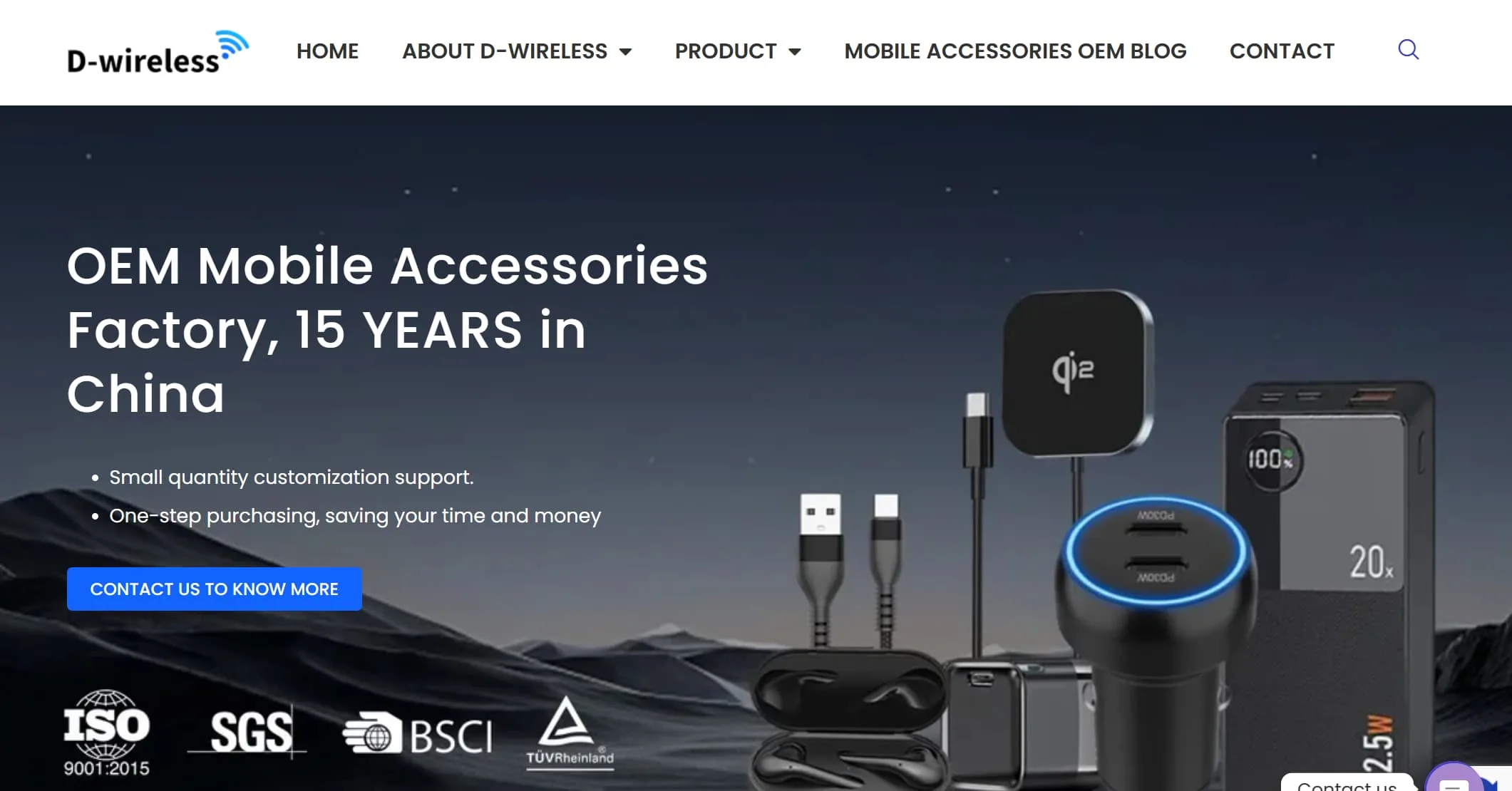
1. Shenzhen D-WIRELESS Co., Ltd.
⭐ Best for: OEM & ODM Mobile Accessories, Private Label Brands, Small-to-Medium Order Buyers
Company Snapshot
| Item | Details |
|---|---|
| Founded | 2012 |
| Headquarters | Shenzhen, Guangdong, China |
| Business Type | OEM & ODM Manufacturer |
| Main Products | USB-C Cables, Lightning Cables, Wireless Chargers, Power Banks, GaN Chargers |
| MOQ | Flexible (depends on product and customization) |
| Main Markets | Europe, North America, Middle East, South America |
| Website | https://www.d-wireless.com |
Company Overview
Shenzhen D-WIRELESS has grown into a professional OEM and ODM manufacturer specializing in mobile charging accessories. Rather than focusing on consumer retail branding, the company works closely with distributors, wholesalers, importers, promotional companies, and private-label brands worldwide.
Its strength lies in providing one-stop manufacturing solutions across multiple product categories, enabling customers to source charging cables, wireless chargers, power banks, and charging adapters from a single supplier.
For businesses looking to build their own brand, D-WIRELESS offers a balance of manufacturing flexibility, engineering support, and export experience.
Product Portfolio
- USB-C to USB-C Cables
- USB-C to Lightning Cables
- USB-A Charging Cables
- Braided Nylon Cables
- Silicone Charging Cables
- Retractable Charging Cables
- Magnetic Charging Cables
- Qi2 Wireless Chargers
- Magnetic Power Banks
- GaN Wall Chargers
- Car Chargers
- Travel Adapters
OEM & ODM Capabilities
D-WIRELESS supports a wide range of customization services, including:
- Private label manufacturing
- Logo printing (laser, silk screen, UV)
- Pantone color matching
- Custom connector housing
- Cable length customization
- Retail packaging
- Eco-friendly packaging
- Barcode labels
- User manuals
- Gift box solutions
For customers developing new products, the company also provides industrial design assistance, engineering support, and prototype development.
Manufacturing Strengths
Key advantages include:
- Experienced engineering team
- Integrated supply chain
- Modern production equipment
- Dedicated quality control process
- Fast sample development
- Stable export experience
- Multi-product sourcing capability
Unlike manufacturers specializing in a single product, D-WIRELESS can support complete mobile accessory product lines under one OEM program.
Recommended For
D-WIRELESS is particularly suitable for:
- Private-label brands
- Mobile accessory distributors
- Promotional gift suppliers
- Amazon sellers
- Consumer electronics importers
- Companies requiring multiple product categories from one supplier
Potential Considerations
The company focuses primarily on B2B manufacturing rather than developing a global consumer brand. Buyers looking for OEM flexibility and long-term manufacturing partnerships may find this specialization advantageous.
2. UGREEN
⭐ Best for: Premium Consumer Electronics & Global Retail
Company Snapshot
| Item | Details |
|---|---|
| Founded | 2012 |
| Headquarters | Shenzhen, China |
| Business Type | Consumer Electronics Brand & Manufacturer |
| Main Products | Charging Cables, GaN Chargers, Docking Stations, Hubs |
| Website | https://www.ugreen.com |
Overview
UGREEN has established itself as one of China’s most recognized consumer electronics brands. Its products are available through major online marketplaces, retailers, and distribution partners across the world.
The company’s product design, packaging, and retail presentation are among its strongest competitive advantages.
Strengths
- Strong international brand recognition
- Premium industrial design
- Extensive retail distribution
- Wide product portfolio
- Continuous innovation
Considerations
UGREEN primarily focuses on its own consumer brand. Buyers seeking highly flexible private-label manufacturing may find OEM customization options more limited than those offered by dedicated OEM factories.
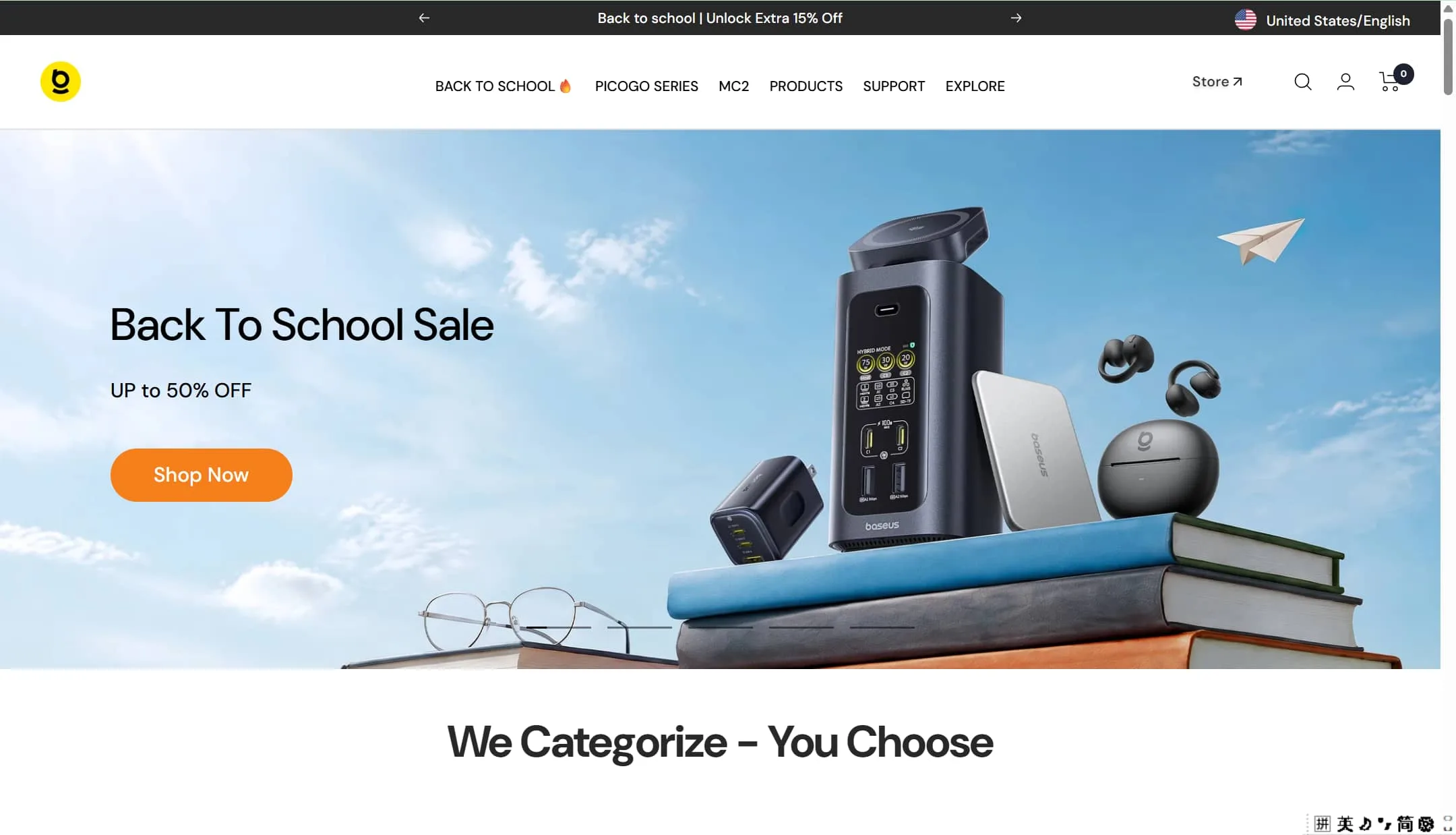
3. Baseus
⭐ Best for: Trend-Driven Consumer Electronics
Company Snapshot
| Item | Details |
|---|---|
| Founded | 2009 |
| Headquarters | Shenzhen, China |
| Business Type | Consumer Electronics Brand |
| Main Products | Charging Accessories, Power Banks, Wireless Chargers |
Overview
Baseus is known for combining modern aesthetics with practical functionality. The company frequently launches innovative accessories designed for lifestyle-conscious consumers.
Its charging cable portfolio includes premium braided cables, USB-C accessories, and fast-charging products aimed at global retail markets.
Strengths
- Excellent industrial design
- Fast product innovation
- Strong international presence
- Attractive retail packaging
Considerations
Like UGREEN, Baseus places significant emphasis on its own global brand, making it more suitable for distributors than private-label buyers seeking extensive OEM customization.
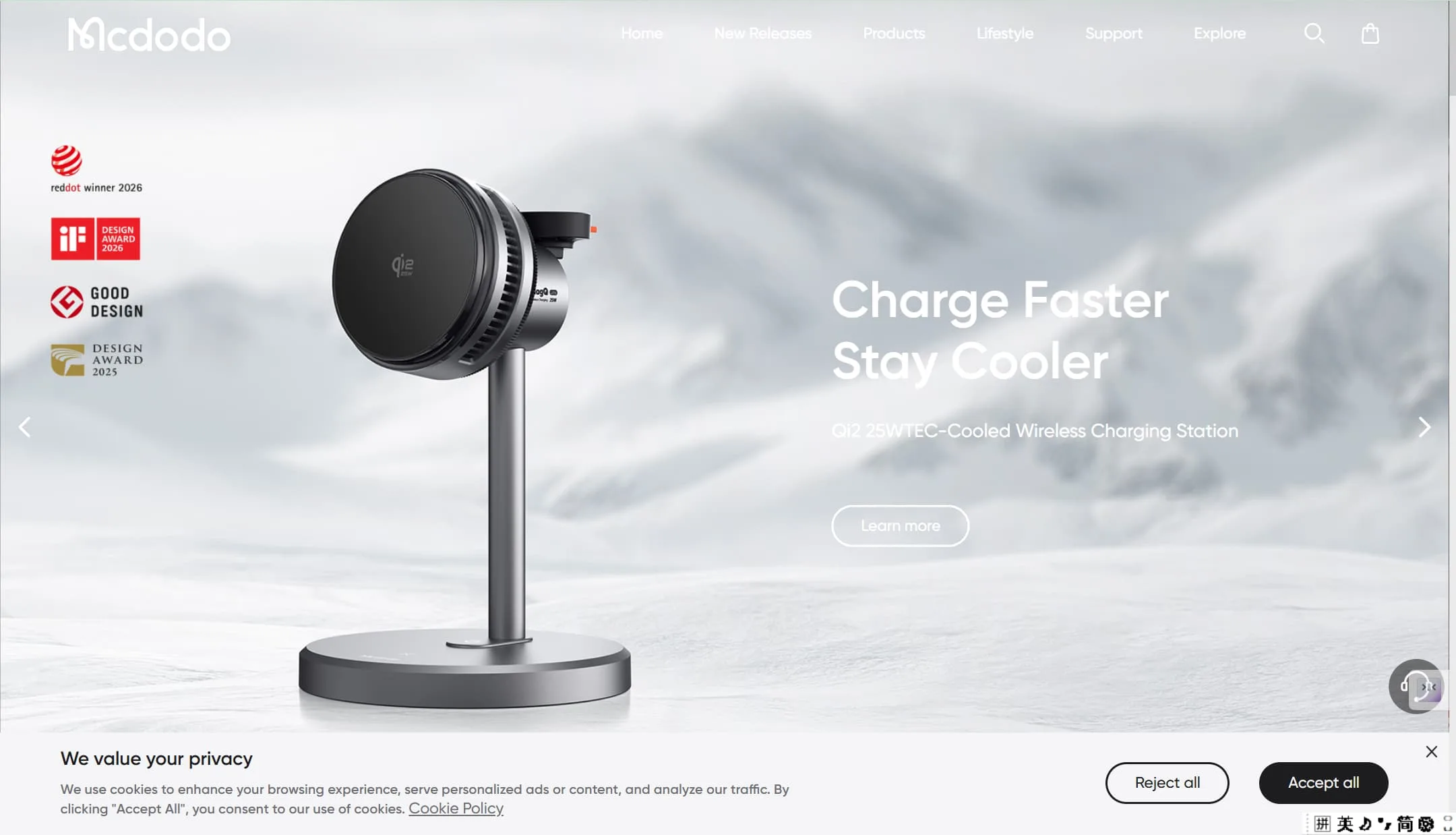
4. Mcdodo
⭐ Best for: Smart Charging Technology
Company Snapshot
| Item | Details |
|---|---|
| Founded | 2013 |
| Headquarters | Guangzhou, China |
| Main Products | Smart Charging Cables, GaN Chargers, Car Chargers |
Overview
Mcdodo differentiates itself through smart charging features such as LED charging indicators, intelligent power management, and innovative connector designs.
The company appeals to buyers looking for feature-rich charging accessories rather than basic commodity products.
Strengths
- Innovative charging technology
- Distinctive product features
- Modern design
- Strong engineering focus
Considerations
Its product range is more specialized, making it ideal for technology-focused retailers rather than buyers seeking a broad OEM manufacturing partner.
5. PISEN
⭐ Best for: Large-Scale Distribution
Company Snapshot
| Item | Details |
|---|---|
| Founded | 2003 |
| Headquarters | Shenzhen, China |
| Main Products | Charging Cables, Power Banks, Chargers |
Overview
PISEN is one of the longest-established brands in China’s mobile accessories industry. The company has built a strong reputation through large-scale production and an extensive domestic and international distribution network.
Its charging cables emphasize reliability, stable quality, and broad market availability.
Strengths
- Long manufacturing history
- Strong production capacity
- Mature supply chain
- Reliable product consistency
Considerations
PISEN is better suited for buyers seeking established branded products than businesses requiring extensive OEM customization.
6. JOYROOM
⭐ Best for: Fashionable Mobile Accessories & Cost-Effective Retail Products
Company Snapshot
| Item | Details |
|---|---|
| Founded | 2009 |
| Headquarters | Shenzhen, Guangdong, China |
| Business Type | Mobile Accessories Brand & Manufacturer |
| Main Products | Charging Cables, Wireless Chargers, Power Banks, Car Chargers |
| Website | https://www.joyroom.com |
Company Overview
JOYROOM has established itself as a well-known mobile accessories brand with a strong presence in Asia, Europe, and the Middle East. The company focuses on combining modern industrial design with competitive pricing, making its products attractive to retailers and distributors serving mass-market consumers.
Its charging cable lineup includes USB-C, Lightning, braided, and fast-charging products designed for everyday use.
Product Portfolio
- USB-C to USB-C Cables
- USB-C to Lightning Cables
- Braided Charging Cables
- Wireless Chargers
- Car Chargers
- Power Banks
Strengths
- Modern product appearance
- Wide product selection
- Competitive pricing
- Established international distribution
- Frequent product updates
Recommended For
- Electronics retailers
- Regional distributors
- Consumer electronics stores
- Online marketplaces
Potential Considerations
JOYROOM is primarily a branded accessories company. Buyers requiring extensive OEM development should confirm available customization options before placing large orders.
7. USAMS
⭐ Best for: Affordable Consumer Electronics Accessories
Company Snapshot
| Item | Details |
|---|---|
| Founded | 2009 |
| Headquarters | Shenzhen, China |
| Business Type | Consumer Electronics Brand |
| Main Products | Charging Cables, Chargers, Phone Accessories |
| Website | https://www.usams.com |
Company Overview
USAMS focuses on practical mobile accessories with modern styling and competitive pricing. Its charging cables are designed for broad consumer markets, making them suitable for wholesalers and retailers looking for dependable everyday products.
Product Portfolio
- USB-C Charging Cables
- Lightning Cables
- Braided Cables
- Power Banks
- Car Chargers
Strengths
- Attractive product design
- Competitive pricing
- Wide distribution network
- Stable manufacturing quality
Recommended For
- Entry-to-mid range retail
- Wholesalers
- Promotional markets
Potential Considerations
USAMS emphasizes branded consumer products more than customized OEM manufacturing.
8. JSAUX
⭐ Best for: Premium USB-C & High-Performance Connectivity Products
Company Snapshot
| Item | Details |
|---|---|
| Founded | 2016 |
| Headquarters | Shenzhen, China |
| Business Type | Consumer Electronics Brand |
| Main Products | USB-C Cables, Docking Stations, HDMI Cables |
| Website | https://www.jsaux.com |
Company Overview
JSAUX has become well known for high-performance connectivity products, particularly among users of laptops, tablets, gaming devices, and USB-C accessories. The company emphasizes premium materials, durability, and engineering quality.
Product Portfolio
- USB-C to USB-C Cables
- High-Speed Data Cables
- HDMI Cables
- Docking Stations
- Laptop Accessories
Strengths
- Premium cable construction
- Strong engineering capability
- High-performance products
- Excellent product durability
Recommended For
- Premium retailers
- Laptop accessory distributors
- Professional users
- Technology enthusiasts
Potential Considerations
JSAUX focuses primarily on branded products rather than flexible OEM manufacturing services.
9. Luxshare Precision
⭐ Best for: Large-Scale Precision Manufacturing
Company Snapshot
| Item | Details |
|---|---|
| Founded | 2004 |
| Headquarters | Dongguan, Guangdong, China |
| Business Type | Precision Electronics Manufacturer |
| Main Products | Electronic Connectors, Charging Cables, Precision Components |
| Website | https://www.luxshare-ict.com |
Company Overview
Luxshare Precision is one of China’s largest precision electronics manufacturers, supplying components and assemblies for globally recognized technology companies. The company is known for advanced manufacturing capabilities, engineering expertise, and high-volume production.
Product Portfolio
- USB-C Cables
- Lightning Cables
- Electronic Connectors
- Consumer Electronics Components
- OEM Manufacturing
Strengths
- Large production capacity
- Advanced automation
- Precision manufacturing
- Strong engineering resources
- Global customer base
Recommended For
- Large OEM projects
- Global electronics brands
- High-volume production
Potential Considerations
Its business model is primarily focused on large-scale manufacturing rather than small private-label projects.
10. Foxlink (Cheng Uei Precision Industry)
⭐ Best for: Global Electronics Supply Chain
Company Snapshot
| Item | Details |
|---|---|
| Founded | 1986 |
| Headquarters | Taiwan (Manufacturing Bases in China) |
| Business Type | Precision Electronics Manufacturer |
| Main Products | Charging Cables, Connectors, Electronic Components |
| Website | https://www.foxlink.com |
Company Overview
Foxlink has decades of experience manufacturing precision connectors and charging accessories for the global electronics industry. Its engineering expertise and international manufacturing footprint make it an important supplier within the consumer electronics supply chain.
Product Portfolio
- USB-C Cables
- Lightning Cables
- Data Transmission Cables
- Electronic Connectors
- OEM Manufacturing
Strengths
- Decades of manufacturing experience
- Precision engineering
- Strong quality management
- Global manufacturing capability
- Stable production capacity
Recommended For
- International electronics companies
- Large OEM customers
- Industrial supply chains
Potential Considerations
Foxlink is generally more suitable for large-volume manufacturing programs than smaller customized private-label projects.
📊 Top 10 Manufacturer Comparison Table
| Manufacturer | Best For | OEM/ODM | Product Range | Suitable Buyer |
|---|---|---|---|---|
| D-WIRELESS | OEM & Private Label | ⭐⭐⭐⭐⭐ | Very Broad | Importers, Distributors, Private Brands |
| UGREEN | Premium Consumer Brand | ⭐⭐☆☆☆ | Broad | Retail Chains |
| Baseus | Lifestyle Electronics | ⭐⭐☆☆☆ | Broad | Consumer Retail |
| Mcdodo | Smart Charging | ⭐⭐☆☆☆ | Medium | Tech Retailers |
| PISEN | Large Distribution | ⭐⭐☆☆☆ | Broad | Wholesalers |
| JOYROOM | Cost-Effective Retail | ⭐⭐☆☆☆ | Broad | Retailers |
| USAMS | Value Products | ⭐⭐☆☆☆ | Medium | Entry-Level Distribution |
| JSAUX | Premium USB-C | ⭐⭐☆☆☆ | Medium | Laptop & Gaming Market |
| Luxshare | Large OEM Manufacturing | ⭐⭐⭐⭐☆ | Specialized | Global Brands |
| Foxlink | Precision Manufacturing | ⭐⭐⭐⭐☆ | Specialized | Industrial OEM |
Note: The OEM/ODM rating reflects the general flexibility of publicly known business models rather than an absolute measure of manufacturing capability.
Which Manufacturer Is Right for Your Business?
Choosing the “best” manufacturer depends on your business model rather than brand recognition.
| Your Business | Recommended Manufacturer Type |
|---|---|
| Private Label Brand | D-WIRELESS |
| Amazon Seller | D-WIRELESS / JOYROOM |
| Premium Retail | UGREEN / Baseus |
| Promotional Gifts | D-WIRELESS |
| Corporate Buyers | D-WIRELESS |
| Large Electronics Brand | Luxshare / Foxlink |
| Laptop Accessories | JSAUX |
| Cost-Sensitive Distribution | PISEN / USAMS |
Our Evaluation Methodology
The manufacturers in this guide were assessed using multiple factors relevant to international buyers, including:
- Manufacturing experience
- Product portfolio
- OEM & ODM capabilities
- Export experience
- Product innovation
- Quality management
- Customer support
- Long-term partnership potential
Different manufacturers excel in different areas, so buyers should match supplier strengths with their own sourcing priorities.
💡 Expert Tip
When comparing manufacturers, don’t ask “Which factory is the best?” Instead ask:
- Which factory best matches my business model?
- Which supplier can support my growth over the next three to five years?
- Which manufacturer offers the right balance of quality, flexibility, and communication?
The right partner is often the one that aligns with your long-term strategy—not necessarily the biggest or most famous name.
Chapter 7 – Manufacturer Comparison & Selection Guide
Why a Manufacturer Comparison Matters
Choosing an iPhone cable manufacturer isn’t simply about finding the lowest price. The right supplier should align with your business goals, product positioning, order volume, and long-term growth strategy.
For example, an Amazon seller launching a private-label brand has different requirements than a multinational retailer sourcing millions of charging cables each year.
By comparing manufacturers across key business criteria, buyers can identify the partner that best fits their needs rather than relying solely on company size or popularity.
Comparison 1 – Company Positioning
| Manufacturer | Primary Business Model | Best For |
|---|---|---|
| D-WIRELESS | OEM & ODM Manufacturer | Private Label Brands, Importers, Distributors |
| UGREEN | Consumer Brand | Retail Chains |
| Baseus | Consumer Electronics Brand | Lifestyle Retail |
| Mcdodo | Smart Charging Brand | Premium Electronics Stores |
| PISEN | Large Consumer Brand | Regional Distribution |
| JOYROOM | Consumer Accessories | General Retail |
| USAMS | Value Accessories | Entry-Level Distribution |
| JSAUX | USB-C & Laptop Accessories | Premium Technology Retail |
| Luxshare Precision | Contract Manufacturer | Global Electronics Brands |
| Foxlink | Precision Electronics Manufacturer | High-Volume OEM Projects |
Comparison 2 – OEM & ODM Capability
One of the biggest differences between manufacturers is the level of customization they provide.
| Manufacturer | Logo | Packaging | Color | New Product Development | Overall Flexibility |
|---|---|---|---|---|---|
| D-WIRELESS | ✔ | ✔ | ✔ | ✔ | Excellent |
| UGREEN | Limited | Limited | Limited | Limited | Moderate |
| Baseus | Limited | Limited | Limited | Limited | Moderate |
| Mcdodo | Limited | Limited | Limited | Limited | Moderate |
| PISEN | Moderate | Moderate | Moderate | Limited | Moderate |
| JOYROOM | Moderate | Moderate | Moderate | Limited | Moderate |
| USAMS | Moderate | Moderate | Moderate | Limited | Moderate |
| JSAUX | Limited | Limited | Limited | Limited | Moderate |
| Luxshare | Available for strategic projects | High-volume focus | Available | Advanced | High |
| Foxlink | Available for strategic projects | High-volume focus | Available | Advanced | High |
Note: OEM and ODM capabilities vary by project size, commercial agreements, and manufacturer policies. Buyers should confirm available services during the quotation stage.
Comparison 3 – Product Portfolio
| Manufacturer | Charging Cables | Wireless Chargers | Power Banks | GaN Chargers | Travel Adapters |
|---|---|---|---|---|---|
| D-WIRELESS | ✔ | ✔ | ✔ | ✔ | ✔ |
| UGREEN | ✔ | ✔ | ✔ | ✔ | Limited |
| Baseus | ✔ | ✔ | ✔ | ✔ | Limited |
| Mcdodo | ✔ | Limited | ✔ | ✔ | No |
| PISEN | ✔ | ✔ | ✔ | Limited | No |
| JOYROOM | ✔ | ✔ | ✔ | Limited | No |
| USAMS | ✔ | Limited | ✔ | Limited | No |
| JSAUX | ✔ | No | No | No | No |
| Luxshare | ✔ | OEM Projects | OEM Projects | OEM Projects | OEM Projects |
| Foxlink | ✔ | OEM Projects | OEM Projects | OEM Projects | OEM Projects |
For buyers looking to source multiple product categories from a single supplier, a broader product portfolio can simplify procurement and reduce supply chain complexity.
Comparison 4 – Typical Buyer Match
Different manufacturers are better suited to different business models.
| Buyer Type | Recommended Manufacturer |
|---|---|
| Startup Brand | D-WIRELESS |
| Amazon Seller | D-WIRELESS, JOYROOM |
| Wholesale Distributor | D-WIRELESS, PISEN |
| Consumer Retail Chain | D-WIRELESS,UGREEN, Baseus |
| Laptop Accessories Retailer | JSAUX |
| Global OEM Brand | D-WIRELESSLuxshare, Foxlink |
| Promotional Products Company | D-WIRELESS |
| Corporate Gift Supplier | D-WIRELESS |
Comparison 5 – Selection Criteria Checklist
Instead of asking “Who is the biggest manufacturer?”, professional buyers evaluate suppliers using a balanced scorecard.
| Evaluation Factor | Why It Matters |
|---|---|
| Manufacturing Experience | Indicates process maturity and production stability |
| Quality Management | Helps reduce defects and warranty claims |
| OEM & ODM Capability | Supports brand differentiation |
| Product Portfolio | Simplifies sourcing across categories |
| Engineering Support | Enables custom product development |
| Export Experience | Reduces logistics and compliance risks |
| Communication | Improves project efficiency |
| After-Sales Support | Strengthens long-term partnerships |
Which Manufacturer Should You Choose?
There is no universal “best” manufacturer.
Instead, the right choice depends on your priorities.
If your priority is…
Launching a private-label brand
Look for manufacturers with flexible OEM services, low-to-medium MOQs, and packaging customization.
Building a long-term supply partnership
Prioritize factories with stable production capacity, experienced engineering teams, and responsive customer support.
Supplying premium retail channels
Focus on manufacturers known for product quality, attractive packaging, and consistent quality management.
Reducing sourcing complexity
Consider suppliers that offer multiple mobile accessory categories under one roof, allowing you to consolidate purchasing and logistics.
Buyer’s Decision Matrix
| Your Priority | Recommended Supplier Type |
|---|---|
| Lowest Initial Investment | Flexible OEM Manufacturer |
| Premium Consumer Products | Consumer Electronics Brand |
| Broad Product Portfolio | One-Stop Mobile Accessories Manufacturer |
| Large-Scale OEM Projects | Contract Manufacturer |
| Fast Product Development | Engineering-Oriented OEM Factory |
Key Takeaways
When evaluating manufacturers, avoid making decisions based on price alone.
A successful sourcing strategy should balance:
- Product quality
- Customization flexibility
- Engineering capability
- Communication efficiency
- Delivery reliability
- Long-term partnership potential
Selecting the right supplier can improve customer satisfaction, reduce warranty costs, and support sustainable business growth.
💡 Expert Tip
Request samples from at least three shortlisted manufacturers before making a final decision. Compare charging performance, build quality, packaging, communication speed, and technical support—not just price.
✅ Buyer Checklist
Before choosing your supplier, confirm:
- OEM/ODM services
- Minimum order quantity (MOQ)
- Sample availability
- Lead time
- Product certifications
- Quality testing procedures
- Warranty policy
- Export experience
- Packaging options
- After-sales support
Chapter 8 – How to Choose the Right iPhone Cable Manufacturer
Choosing the Right Manufacturer Is More Important Than Finding the Lowest Price
For many first-time buyers, the lowest quotation often appears to be the best option. However, experienced importers understand that the purchase price represents only a small portion of the total cost of importing charging cables.
A supplier offering a slightly lower unit price may ultimately cost far more if product quality is inconsistent, delivery schedules are unreliable, or communication is poor.
The ideal manufacturing partner should not only produce reliable charging cables but also support your business through consistent quality, responsive communication, engineering expertise, and long-term cooperation.
Before requesting quotations, buyers should establish a clear evaluation framework rather than comparing suppliers on price alone.
1. Define Your Business Model First
Different businesses require different types of manufacturing partners.
Ask yourself the following questions before contacting suppliers:
- Are you launching a private-label brand?
- Are you purchasing for wholesale distribution?
- Do you sell through Amazon or Shopify?
- Are you sourcing promotional gifts?
- Do you need customized packaging?
- Will you expand into additional mobile accessories later?
Your answers will determine which supplier profile best matches your long-term business goals.
Example
| Business Type | Recommended Supplier |
|---|---|
| Startup Brand | Flexible OEM Manufacturer |
| Amazon Seller | OEM Factory with Branding Support |
| Distributor | Large Production Capacity |
| Corporate Gift Company | Low MOQ + Packaging Customization |
| Retail Chain | Stable Supply + Certifications |
2. Evaluate Manufacturing Experience
Experience is one of the strongest indicators of production stability.
Manufacturers with many years of experience typically have more mature production systems, stronger supplier relationships, and better quality management procedures.
Instead of simply asking:
“How many years have you been in business?”
Ask more practical questions such as:
- How many charging cables do you manufacture each month?
- What percentage of production is exported?
- Which markets do you serve most frequently?
- How many engineers are involved in product development?
These questions provide better insight into the manufacturer’s real capabilities.
3. Review Product Portfolio
A supplier offering multiple complementary products can simplify your sourcing process.
For example, instead of purchasing from separate factories, many buyers prefer suppliers capable of manufacturing:
- USB-C charging cables
- Lightning cables
- Power banks
- Wireless chargers
- GaN chargers
- Travel adapters
This approach reduces supplier management costs while maintaining more consistent branding across product categories.
4. Assess OEM & ODM Capability
For private-label businesses, customization is often more valuable than the lowest purchase price.
Ask suppliers whether they support:
Product Customization
- Custom cable length
- Pantone color matching
- Connector housing design
- Material selection
- Retail packaging
Branding
- Laser engraving
- Silk-screen printing
- UV printing
- Barcode labels
- User manuals
- Instruction cards
Product Development
- Industrial design
- Prototype development
- Mold creation
- Engineering optimization
A manufacturer with strong OEM and ODM capabilities can help you create differentiated products that stand out in competitive markets.
5. Verify Quality Control Procedures
A reliable supplier should have documented quality control procedures throughout production.
Ask questions such as:
- Are incoming materials inspected?
- Is every production batch electrically tested?
- Are durability tests performed?
- What is the acceptance standard before shipment?
- Can quality reports be provided?
Professional factories should be able to explain their inspection process clearly.
6. Review Certifications
Depending on your target market, different certifications may be required.
Typical certifications include:
| Certification | Typical Purpose |
|---|---|
| CE | European market compliance |
| RoHS | Hazardous substance compliance |
| FCC | United States electromagnetic compliance |
| REACH | European chemical regulation |
| ISO 9001 | Quality management system |
Before placing an order, confirm that the certifications are applicable to the specific product you intend to purchase and the destination market.
7. Evaluate Communication Efficiency
Good communication is often underestimated.
A responsive sales representative can significantly improve project efficiency by helping buyers:
- Confirm specifications
- Solve technical questions
- Track production progress
- Arrange logistics
- Resolve after-sales issues
Poor communication frequently leads to misunderstandings, delays, and unnecessary costs.
8. Request Samples Before Mass Production
Never approve a production order based solely on product photos.
A physical sample allows you to evaluate:
- Charging performance
- Build quality
- Connector fit
- Cable flexibility
- Packaging quality
- Logo printing
- Overall appearance
Testing samples before production helps identify potential issues early and reduces business risk. Contact us to get samples.
9. Compare Total Cost, Not Just Unit Price
Many buyers make the mistake of selecting the supplier with the lowest quotation.
Instead, compare the total value of each supplier.
| Evaluation Item | Importance |
|---|---|
| Product Quality | ★★★★★ |
| Communication | ★★★★★ |
| Delivery Reliability | ★★★★★ |
| Engineering Support | ★★★★☆ |
| Customization | ★★★★☆ |
| Unit Price | ★★★☆☆ |
A supplier offering slightly higher pricing may deliver significantly greater long-term value through fewer defects, lower return rates, and stronger customer support.
10. Build a Long-Term Partnership
The most successful brands rarely change manufacturers every year.
Instead, they develop long-term partnerships based on:
- Stable quality
- Mutual trust
- Continuous product improvement
- Transparent communication
- Shared business growth
A reliable manufacturing partner becomes an extension of your own business rather than simply a supplier.
Factory Audit Checklist
Before placing your first production order, consider asking these questions:
| Checklist | Status |
|---|---|
| Factory experience verified | ☐ |
| Product samples approved | ☐ |
| Quality control process reviewed | ☐ |
| Certifications confirmed | ☐ |
| OEM capability verified | ☐ |
| Packaging approved | ☐ |
| Production lead time confirmed | ☐ |
| Warranty policy understood | ☐ |
| Shipping terms agreed | ☐ |
| Payment terms confirmed | ☐ |
Sample Evaluation Checklist
After receiving samples, evaluate:
- Appearance
- Weight
- Cable flexibility
- Connector finish
- Charging speed
- Data transfer performance
- Logo quality
- Packaging
- User experience
- Overall consistency
Keeping a standardized evaluation checklist makes supplier comparisons more objective.
Common Warning Signs
Be cautious if a supplier:
- Cannot explain its quality control process.
- Avoids providing product specifications.
- Offers prices significantly below the market average without a clear explanation.
- Responds slowly or inconsistently during the quotation stage.
- Is unwilling to provide samples or documentation.
- Makes unrealistic promises about lead times or product performance.
These warning signs do not necessarily indicate a poor supplier, but they warrant additional verification before proceeding.
Key Takeaways
Selecting the right manufacturer is about balancing quality, flexibility, communication, engineering capability, and long-term reliability.
A structured evaluation process reduces sourcing risks and helps establish partnerships that support sustainable business growth.
💡 Expert Tip
Treat your first order as an evaluation project rather than a purchasing transaction. Start with a manageable quantity, review product quality, communication, and delivery performance, then gradually increase order volume once the supplier has demonstrated consistent reliability.
✅ Buyer Checklist
Before confirming your supplier, ensure you have:
- Reviewed company background
- Compared at least three quotations
- Tested physical samples
- Verified quality procedures
- Confirmed certifications
- Approved packaging artwork
- Agreed on lead time
- Clarified warranty terms
- Confirmed payment terms
- Selected appropriate shipping terms
Chapter 9 – OEM & ODM Customization Services for iPhone Charging Cables
Why OEM Customization Is Growing Rapidly
The global charging cable market has become increasingly competitive. Selling standard, off-the-shelf products is no longer enough for many distributors and retailers to differentiate themselves.
As a result, more businesses are turning to OEM (Original Equipment Manufacturing) and ODM (Original Design Manufacturing) services to create products that reflect their own brand identity.
Whether you are launching a new electronics brand, supplying promotional products, or expanding an existing product line, customization allows you to offer products that stand out in the marketplace while improving brand recognition and customer loyalty.
Professional manufacturers can now customize nearly every aspect of a charging cable—from its internal specifications to its retail packaging.
OEM vs ODM – What’s the Difference?
Although the terms OEM and ODM are often used together, they describe different manufacturing approaches.
| Service | OEM | ODM |
|---|---|---|
| Product Design | Existing Product | New or Customized Design |
| Logo Printing | ✔ | ✔ |
| Color Customization | ✔ | ✔ |
| Packaging Design | ✔ | ✔ |
| Structural Design | Limited | ✔ |
| Mold Development | No | ✔ |
| Development Time | Short | Longer |
| Development Cost | Lower | Higher |
OEM
OEM is ideal for buyers who want to customize existing products with their own branding while minimizing development cost and lead time.
Typical OEM projects include:
- Logo printing
- Packaging customization
- Cable color changes
- Cable length selection
- Connector color customization
ODM
ODM is suitable for companies looking to develop unique products that differ from standard market offerings.
ODM projects may include:
- New industrial design
- Custom housing
- New connector structure
- New packaging concept
- Exclusive product development
Although ODM requires greater investment, it provides stronger product differentiation and long-term brand value.
1. Logo Customization
Logo printing is the most common OEM requirement.
Professional manufacturers generally support several printing methods depending on the cable material and connector finish.
| Printing Method | Appearance | Durability | Best For |
|---|---|---|---|
| Laser Engraving | Metallic Finish | Excellent | Aluminum Connectors |
| Silk Screen Printing | Single or Multi-Color | Good | PVC & TPE Products |
| UV Printing | Full Color | Excellent | Premium Retail Products |
| Pad Printing | Cost-Effective | Good | Promotional Products |
The most suitable printing method depends on the product material, brand image, and target market.
2. Cable Material Customization
Material selection significantly affects both product appearance and user experience.
Common options include:
| Material | Advantages | Typical Applications |
|---|---|---|
| PVC | Cost-effective | Promotional Products |
| TPE | Flexible | Everyday Consumer Products |
| Braided Nylon | Durable | Premium Retail |
| Liquid Silicone | Soft Touch | Lifestyle Brands |
| Eco Materials | Sustainable | Green Product Lines |
Selecting the right material helps position products within different market segments.
3. Connector Customization
Many buyers focus on cable colors while overlooking connector design.
However, premium connector finishes can significantly improve perceived product value.
Customization options may include:
- Aluminum alloy housing
- Zinc alloy housing
- Matte finish
- Gloss finish
- Custom colors
- Brand engraving
4. Cable Length Options
Different customers require different cable lengths.
Typical options include:
| Length | Common Applications |
|---|---|
| 0.25 m | Power Banks |
| 0.5 m | Travel |
| 1 m | Daily Charging |
| 1.5 m | Home & Office |
| 2 m | Bedrooms |
| 3 m | Professional Use |
Offering multiple lengths allows brands to address a wider range of customer needs.
5. Fast Charging Specifications
Modern buyers increasingly expect charging cables to support higher charging power.
Depending on the product design, manufacturers can offer different specifications suitable for smartphones, tablets, and laptops.
Typical product categories include:
| Power Category | Typical Applications |
|---|---|
| Standard Charging | Entry-Level Devices |
| Fast Charging | Smartphones & Tablets |
| High-Power Charging | Laptops & Professional Devices |
When selecting a cable, buyers should confirm that the product specification matches the intended charging protocol and compatible devices.
6. Retail Packaging
Packaging plays a major role in brand presentation.
Professional OEM suppliers commonly offer:
- Retail color boxes
- Kraft paper packaging
- Eco-friendly packaging
- Hanging blister cards
- Premium gift boxes
- Customized inserts
- Instruction manuals
High-quality packaging can increase perceived product value while improving retail presentation.
7. Eco-Friendly Packaging
Sustainability has become increasingly important, particularly in Europe and North America.
Many brands now request:
- FSC-certified paper
- Plastic-free packaging
- Soy-based ink printing
- Recyclable cartons
These options help brands align with environmental initiatives while meeting customer expectations.
8. Barcode & Retail Labels
For products entering retail stores or online fulfillment centers, manufacturers can typically provide:
- UPC labels
- EAN labels
- QR codes
- SKU labels
- Product stickers
This simplifies inventory management and retail distribution.
OEM Development Workflow
A typical OEM project follows these stages:
- Product Selection
- Requirement Discussion
- Quotation
- Artwork Confirmation
- Sample Production
- Sample Approval
- Mass Production
- Quality Inspection
- Packaging
- Shipment
Maintaining clear communication throughout the project helps reduce misunderstandings and ensures the final product meets customer expectations.
Which Customization Delivers the Highest ROI?
Not every customization requires a large investment.
For many private-label brands, the following upgrades offer an excellent balance between cost and perceived value:
- Professional logo printing
- Premium braided or silicone materials
- Customized retail packaging
- Pantone color matching
- Premium connector finish
These improvements can significantly strengthen brand image without requiring full ODM development.
Key Takeaways
OEM customization enables businesses to create differentiated products while controlling development costs.
Whether you require simple logo printing or complete product development, selecting an experienced manufacturing partner with flexible customization capabilities can help your brand compete more effectively in today’s mobile accessories market.
💡 Expert Tip
For first-time OEM buyers, start with an existing product and focus on branding, packaging, and material upgrades. Once your brand gains market traction, consider investing in ODM development for exclusive product designs.
✅ Buyer Checklist
Before starting an OEM project, confirm:
- Product model
- Charging specification
- Cable material
- Connector finish
- Logo artwork
- Packaging design
- Label requirements
- Sample approval
- Production schedule
- Shipping method
Chapter 10 – Quality Control & Product Testing
Why Quality Control Is Critical for Charging Cables
Charging cables may appear simple, but they are precision electronic accessories that must deliver stable power, reliable data transmission, and long-term durability under daily use.
A cable with poor materials or inadequate manufacturing control may initially appear identical to a premium product, yet differences quickly become apparent after repeated charging cycles.
Common problems associated with low-quality cables include:
- Slow charging performance
- Charging interruptions
- Unstable data transfer
- Connector loosening
- Broken conductors
- Overheating
- Premature cable failure
- Increased warranty claims
For distributors, importers, and private-label brands, these issues directly affect customer satisfaction, product reviews, and long-term profitability.
Professional manufacturers therefore implement quality control throughout the entire production process—not just during final inspection.
The Four Stages of Quality Control
Most professional cable manufacturers follow a structured quality management system consisting of four main inspection stages.
| QC Stage | Full Name | Purpose |
|---|---|---|
| IQC | Incoming Quality Control | Verify raw materials before production |
| IPQC | In-Process Quality Control | Monitor production consistency |
| FQC | Final Quality Control | Inspect completed products |
| OQC | Outgoing Quality Control | Verify products before shipment |
Each stage reduces the risk of defects progressing to the next production step.
IQC – Incoming Quality Control
Quality begins long before production starts.
Every batch of incoming materials should be inspected before entering the production line.
Typical inspections include:
Copper Conductors
- Conductor purity
- Wire diameter
- Electrical conductivity
Connectors
- Dimensional accuracy
- Surface finish
- Contact quality
Plastic Components
- Material consistency
- Color matching
- Surface defects
Packaging Materials
- Printing quality
- Color consistency
- Structural integrity
Detecting material defects early prevents costly production issues later.
IPQC – In-Process Quality Control
During production, inspectors continuously monitor critical manufacturing steps.
Typical inspection items include:
- Wire cutting accuracy
- Soldering quality
- Connector alignment
- Injection molding consistency
- Logo printing accuracy
- Assembly quality
Rather than waiting until production is complete, in-process inspections identify problems immediately, reducing waste and improving consistency.
FQC – Final Quality Control
Once production is completed, finished products undergo comprehensive inspection.
Typical checks include:
- Charging performance
- Data transmission
- Connector fit
- Appearance
- Packaging
- Label verification
At this stage, defective products are removed before shipment.
OQC – Outgoing Quality Control
The final inspection confirms that products meet customer requirements before leaving the factory.
Typical verification includes:
- Product quantity
- Packaging
- Carton labeling
- Shipping marks
- Random functional testing
Only products that pass outgoing inspection proceed to shipment.
Essential Product Tests
Professional charging cable manufacturers perform multiple reliability tests to ensure consistent performance.
1. Plug Cycle Test
Charging cables are plugged in and removed thousands of times during normal use.
The plug cycle test evaluates connector durability by repeatedly inserting and removing the connector under controlled conditions.
This helps verify:
- Connector wear
- Contact stability
- Mechanical durability
2. Bend Test
One of the most common reasons for cable failure is repeated bending near the connector.
During bend testing, the cable is flexed continuously to simulate years of daily use.
This evaluates:
- Cable flexibility
- Internal conductor durability
- Strain relief performance
3. Tensile Strength Test
Pull testing measures the mechanical strength of the cable and connector assembly.
The objective is to verify that the connector remains securely attached under reasonable pulling force.
4. Charging Performance Test
Professional factories verify:
- Voltage stability
- Current stability
- Charging consistency
For higher-power USB-C products, testing should also confirm support for the specified charging protocol.
5. Data Transmission Test
Charging cables used for data synchronization must demonstrate reliable communication between connected devices.
Typical testing includes:
- File transfer stability
- Signal integrity
- Data communication consistency
6. High Temperature Test
Charging accessories may operate in elevated ambient temperatures.
Thermal testing evaluates:
- Material stability
- Connector performance
- Electrical reliability
under controlled high-temperature conditions.
7. Salt Spray Test
For metal connector housings, salt spray testing evaluates resistance to corrosion in humid or coastal environments.
Common Causes of Cable Failure
Understanding why cables fail helps buyers evaluate product quality more effectively.
| Failure | Typical Cause |
|---|---|
| Broken Connector | Poor strain relief design |
| Slow Charging | High electrical resistance or underspecified conductors |
| Intermittent Charging | Poor soldering or connector wear |
| Cable Cracking | Low-quality insulation materials |
| Overheating | Poor conductor design or unsuitable materials |
| Data Errors | Signal integrity or connector quality issues |
Professional manufacturing and quality control significantly reduce the likelihood of these problems.
Why Quality Testing Reduces Total Cost
Some buyers focus exclusively on unit price.
However, lower-quality products often lead to:
- Higher return rates
- Increased warranty claims
- Poor customer reviews
- Additional logistics costs
- Brand reputation damage
Investing in reliable manufacturing quality typically lowers the total cost of ownership, even if the initial purchase price is slightly higher.
Quality Documentation Buyers Should Request
Before approving production, consider requesting documentation such as:
- Product specification sheet
- Quality inspection report
- Functional test report
- Material information
- Packaging specification
- Warranty policy
The specific documents available may vary by product and manufacturer.
Key Takeaways
Consistent quality is not achieved through final inspection alone.
Reliable manufacturers build quality into every stage of production—from raw material selection and automated assembly to functional testing and outgoing inspection.
For OEM buyers, selecting a supplier with a mature quality management system is one of the most effective ways to reduce sourcing risks and build long-term customer trust.
💡 Expert Tip
Ask suppliers how they test their products, not just whether they perform testing. Manufacturers that can clearly explain their inspection procedures, equipment, and acceptance criteria are generally better prepared to deliver consistent quality.
✅ Buyer Checklist
Before approving mass production, verify:
- Incoming material inspection process
- Production quality control procedures
- Functional testing methods
- Durability testing
- Packaging inspection
- Random shipment inspection
- Warranty policy
- Product traceability
Chapter 11 – International Certifications for iPhone Charging Cables
Why Certifications Matter
For importers and brand owners, certifications are more than regulatory requirements—they are an important part of risk management.
Different countries have different product compliance rules, and selecting the wrong certification strategy can lead to customs delays, rejected shipments, additional testing costs, or difficulties selling through major retailers and e-commerce platforms.
Working with a manufacturer that understands international compliance requirements can help reduce these risks and simplify market entry.
Before placing an order, buyers should identify the destination market and confirm which certifications apply to the specific product being imported.
Which Certifications Do You Need?
The required certifications depend on where the products will be sold, not simply where they are manufactured.
The table below summarizes common certification requirements.
| Destination Market | Common Compliance Requirements* |
|---|---|
| European Union | CE, RoHS, REACH (depending on product) |
| United Kingdom | UKCA (where applicable), RoHS |
| United States | FCC (where applicable), state-specific requirements may apply |
| Canada | Product requirements vary by category |
| Australia & New Zealand | Market-specific electrical compliance may apply |
| Middle East | Country-specific certification requirements |
| South America | Requirements vary by country |
*Certification requirements differ by product type, electrical characteristics, and local regulations. Buyers should confirm current requirements with their importer, certification body, or local authority before shipment.
CE Marking
Best For
European Union markets.
The CE marking indicates that a product is intended to comply with relevant European legislation applicable to that product category.
For charging accessories, CE-related requirements may involve aspects such as:
- Electrical safety
- Electromagnetic compatibility (EMC)
- Environmental requirements
- Product documentation
Professional manufacturers usually prepare the required technical documentation and test reports to support CE compliance where applicable.
RoHS Compliance
Why It Matters
RoHS (Restriction of Hazardous Substances) limits the use of certain hazardous substances in electrical and electronic equipment.
RoHS is particularly important for:
- European markets
- Environmentally conscious brands
- Large retail chains
Products are generally evaluated to ensure restricted substances remain within permitted limits.
REACH
REACH focuses on chemical substances used in products.
Although many buyers pay more attention to CE and RoHS, REACH may also be relevant depending on the destination market and product materials.
For brands emphasizing sustainability and environmental responsibility, confirming REACH-related compliance can provide additional confidence.
FCC
United States Market
For products incorporating wireless communication or radio-frequency functions, FCC requirements may apply.
Whether FCC compliance is required depends on the product design and applicable regulations.
For example:
| Product | FCC May Apply?* |
|---|---|
| USB Charging Cable | Typically not for a passive cable itself |
| Wireless Charger | Often applicable |
| Bluetooth Accessories | Commonly applicable |
| Wireless Earbuds | Commonly applicable |
*Actual compliance obligations depend on the specific product and regulatory classification.
UKCA
Following regulatory changes in the United Kingdom, some products placed on the Great Britain market may require UKCA marking instead of, or in addition to, CE marking depending on the applicable regulations and transition arrangements.
Buyers targeting the UK market should verify current requirements before shipment.
ISO 9001
Unlike CE or RoHS, ISO 9001 is not a product certification.
Instead, it is an internationally recognized quality management system standard.
A manufacturer operating an ISO 9001-certified management system demonstrates that it has established documented processes for quality management and continuous improvement.
For OEM buyers, this can provide additional confidence in manufacturing consistency.
USB-IF Compliance
For USB-C products, compliance with USB standards is another important consideration.
The USB Implementers Forum (USB-IF) develops technical specifications covering:
- USB Type-C
- USB Power Delivery
- USB4
- Cable performance
Manufacturers designing products around these specifications are generally better positioned to support compatibility across a wide range of USB-C devices.
Which Certifications Matter Most?
Different business models require different priorities.
| Buyer Type | Typical Focus |
|---|---|
| European Distributor | CE, RoHS, REACH |
| US Importer | Product-specific FCC requirements where applicable |
| Amazon Seller | Compliance documentation requested by the marketplace or destination market |
| Corporate Gift Supplier | Product quality and applicable compliance documentation |
| Private Label Brand | Compliance strategy based on target markets |
Documents Buyers Should Request
Before mass production, buyers may consider requesting:
- Product specification sheet
- Declaration of Conformity (where applicable)
- Relevant test reports
- Material information
- Packaging specifications
- Warranty policy
The exact documentation depends on the product, destination market, and regulatory requirements.
Common Certification Mistakes
Many first-time buyers make avoidable mistakes such as:
Assuming one certification covers every market
Compliance requirements differ by country and product.
Requesting unnecessary certifications
Additional testing increases both cost and lead time.
Only request certifications relevant to your destination market and product.
Confusing product certifications with factory certifications
For example:
- CE relates to product compliance.
- RoHS relates to material restrictions.
- ISO 9001 relates to the manufacturer’s quality management system.
Understanding these differences helps buyers communicate more effectively with suppliers.
Key Takeaways
Compliance should be planned at the beginning of a sourcing project rather than after production has started.
By understanding the requirements of your destination market and working with experienced manufacturers, you can reduce regulatory risks, avoid unnecessary costs, and improve the efficiency of your import process.
💡 Expert Tip
Instead of asking a supplier, “Do you have CE?”, ask:
- Which compliance documents are available for this specific product?
- Are the documents applicable to my destination market?
- Can you provide the supporting test reports or declarations where appropriate?
These questions provide much more useful information during supplier evaluation.
✅ Buyer Checklist
Before shipment, confirm:
- Destination market requirements
- Applicable product compliance documents
- Product specifications
- Test reports (where available)
- Packaging labels
- User manual language
- Import documentation
- Warranty policy
Chapter 12 – 12 Common Sourcing Mistakes Buyers Should Avoid
Why Even Experienced Buyers Make Costly Sourcing Mistakes
China is home to thousands of charging cable manufacturers, trading companies, and sourcing agents. While this provides buyers with abundant options, it also makes supplier selection more challenging.
Many sourcing problems are not caused by manufacturing itself—they result from unclear expectations, incomplete supplier evaluation, or inadequate communication before production begins.
Whether you are placing your first OEM order or managing an established supply chain, avoiding the following common mistakes can save significant time, cost, and frustration.
Mistake 1 – Choosing the Lowest Price Without Evaluating Quality
Price is often the first factor buyers compare, but it should never be the only one.
A quotation that is significantly below the market average may indicate differences in:
- Copper conductor quality
- Connector materials
- Cable construction
- Quality inspection procedures
- Packaging standards
- Warranty support
While a lower price is not necessarily a warning sign, buyers should understand why a quotation differs before making a decision.
Better Approach
Compare the total value offered by each supplier, including quality, service, lead time, and technical support.
Mistake 2 – Not Testing Samples Before Mass Production
Product photos and specification sheets cannot fully represent the user experience.
Always request samples before approving production.
Evaluate:
- Charging performance
- Data transfer stability
- Cable flexibility
- Connector fit
- Logo quality
- Packaging
Sample approval helps identify potential issues before mass production begins.
Mistake 3 – Ignoring Quality Control Procedures
Many buyers ask:
“Do you perform quality inspection?”
A better question is:
“Can you explain your quality control process from incoming materials to shipment?”
Professional manufacturers should be able to describe:
- Incoming material inspection
- In-process inspection
- Functional testing
- Final inspection
- Outgoing inspection
Clear answers usually indicate a mature production system.
Mistake 4 – Focusing Only on Product Photos
Excellent product photography does not necessarily reflect manufacturing capability.
Ask suppliers to provide additional information such as:
- Production workshop photos
- Testing laboratory photos
- Packaging process
- Production equipment
- Factory certifications
A more complete understanding of the manufacturing environment supports better purchasing decisions.
Mistake 5 – Overlooking Communication Quality
Communication often predicts future cooperation.
Consider:
- Response speed
- Technical knowledge
- Ability to answer detailed questions
- Willingness to explain production processes
- Follow-up efficiency
Reliable communication during the quotation stage often leads to smoother project execution.
Mistake 6 – Not Confirming Product Specifications
Never assume that every “USB-C cable” has the same specifications.
Before production, confirm details such as:
- Cable length
- Connector type
- Charging power
- Data transmission capability
- Material
- Packaging
A written specification sheet helps prevent misunderstandings.
Mistake 7 – Forgetting Packaging Requirements
Packaging should be finalized before production begins.
Confirm:
- Retail box design
- Logo placement
- Barcode labels
- User manuals
- Carton markings
Changes after production starts may increase both cost and lead time.
Mistake 8 – Ignoring Lead Time Planning
Production schedules can vary depending on:
- Product complexity
- Customization level
- Material availability
- Order quantity
- Peak production seasons
Avoid planning product launches based on optimistic assumptions.
Instead, discuss realistic production and shipping schedules with your supplier before confirming orders.
Mistake 9 – Not Clarifying Warranty Terms
Before placing an order, discuss:
- Warranty period
- Replacement policy
- Quality claim procedure
- Response time
- Responsibility for shipping costs
Clear warranty agreements reduce disputes if problems occur after delivery.
Mistake 10 – Choosing Too Many Suppliers Too Early
Managing multiple suppliers increases complexity.
For businesses just entering the market, working with one reliable manufacturing partner often improves:
- Communication
- Quality consistency
- Branding
- Purchasing efficiency
As your product range expands, additional suppliers can be introduced strategically.
Mistake 11 – Ignoring Future Product Expansion
Many buyers initially source only charging cables.
However, successful brands often expand into:
- Power banks
- Wireless chargers
- GaN chargers
- Car chargers
- Travel adapters
Selecting a supplier with a broader product portfolio can simplify future growth.
Mistake 12 – Treating Suppliers as Vendors Instead of Partners
The strongest supply chains are built on long-term relationships.
Professional manufacturers can contribute:
- Product improvement ideas
- Market insights
- Engineering support
- Packaging suggestions
- Cost optimization
- New product recommendations
Long-term cooperation often creates greater value than continually switching suppliers based solely on price.
Summary of Common Mistakes
| Mistake | Better Practice |
|---|---|
| Choosing the lowest price | Compare total value |
| Skipping sample testing | Approve samples first |
| Ignoring QC | Review the inspection process |
| Trusting photos only | Request factory information |
| Poor communication | Evaluate responsiveness |
| Unclear specifications | Confirm written specifications |
| Late packaging changes | Finalize artwork early |
| Unrealistic lead times | Plan realistic schedules |
| Undefined warranty | Clarify responsibilities |
| Too many suppliers | Build one strong partnership first |
| Limited product planning | Consider future expansion |
| Transaction mindset | Develop long-term cooperation |
A Practical Supplier Evaluation Framework
Instead of selecting suppliers based on a single factor, evaluate them using a balanced scorecard.
| Evaluation Factor | Weight |
|---|---|
| Product Quality | 25% |
| Communication | 20% |
| OEM & ODM Capability | 15% |
| Quality Management | 15% |
| Delivery Reliability | 10% |
| Engineering Support | 10% |
| Price | 5% |
This framework helps buyers make more objective sourcing decisions by considering the overall value a supplier provides.
Key Takeaways
Most sourcing challenges can be prevented through better planning, clear communication, and structured supplier evaluation.
Rather than focusing solely on price, successful buyers build long-term partnerships with manufacturers that consistently deliver quality, reliability, and professional support.
💡 Expert Tip
Treat your first order as the beginning of a long-term partnership, not a one-time transaction. Evaluate not only the product itself, but also the supplier’s communication, responsiveness, problem-solving ability, and willingness to support your business as it grows.
✅ Buyer Checklist
Before confirming your first order, verify:
- Product specifications approved
- Sample tested
- Packaging artwork approved
- Production schedule confirmed
- Applicable compliance documents reviewed
- Warranty terms agreed
- Shipping terms confirmed
- Payment schedule confirmed
- Quality inspection requirements documented
- Main communication contact assigned
Chapter 13 – Real-World Sourcing Case Studies
Why Real Sourcing Scenarios Matter
Every buyer has different priorities when sourcing iPhone charging cables from China.
Some focus on reducing costs, while others prioritize product quality, customization, certifications, or delivery speed.
Rather than presenting fictional success stories, the following examples illustrate common sourcing scenarios based on typical challenges faced by international buyers. These examples demonstrate how structured supplier evaluation and effective communication can improve sourcing outcomes.
Case Study 1 – Building a Private Label Brand in Europe
Buyer Profile
- Business Type: Consumer Electronics Distributor
- Market: Western Europe
- Sales Channels: Online Store & Regional Retailers
- Initial Order: Private-label USB-C charging cables
Challenge
The buyer planned to launch a new accessories brand targeting premium smartphone users.
Several manufacturers offered attractive pricing, but their product samples showed inconsistent connector finishes, basic packaging, and limited branding options.
The buyer also needed products suitable for distribution within European markets, making product documentation and packaging quality particularly important.
Solution
Instead of selecting the lowest quotation, the buyer compared suppliers using a structured evaluation process.
The evaluation included:
- Sample quality
- Communication efficiency
- Packaging capability
- OEM flexibility
- Production lead time
- Quality management process
After comparing several suppliers, the buyer selected a manufacturer that provided:
- Pantone color matching
- Laser logo engraving
- Premium braided cable materials
- Customized retail packaging
- Stable production planning
Result
The project launched on schedule with a consistent brand identity across the product range.
Key benefits included:
- Professional retail presentation
- Consistent product quality
- Simplified communication
- Reduced product returns
- Strong foundation for future product expansion
Key Lesson
A slightly higher purchase price can often deliver greater long-term value through better product consistency, stronger branding, and lower after-sales costs.
Case Study 2 – Expanding a Promotional Products Business
Buyer Profile
- Business Type: Promotional Products Supplier
- Market: Middle East
- Customers: Corporate Events & Business Gifts
Challenge
The buyer required customized charging cables for multiple corporate clients.
Each project involved different logo designs, packaging requirements, and delivery schedules.
Managing several factories created unnecessary complexity and inconsistent branding.
Solution
The buyer consolidated sourcing with a manufacturer capable of supplying multiple charging accessory categories under one OEM program.
Products included:
- Charging cables
- Power banks
- Wireless chargers
Standardized branding guidelines were applied across all products, simplifying artwork approval and reducing communication time.
Result
The company reduced supplier management workload while improving consistency across its promotional product portfolio.
Benefits included:
- Unified branding
- More efficient purchasing
- Faster project coordination
- Simplified logistics
- Improved customer satisfaction
Key Lesson
Working with a supplier that offers multiple complementary products can reduce operational complexity and support future business growth.
Case Study 3 – Improving Product Quality for an Online Seller
Buyer Profile
- Business Type: Cross-Border E-commerce Seller
- Market: North America
- Sales Channel: Online Marketplace
Challenge
The seller experienced increasing customer complaints related to cable durability.
Common issues included:
- Broken connectors
- Cable cracking
- Charging interruptions
Although the purchase price was competitive, warranty claims and negative reviews were affecting profitability.
Solution
The seller reviewed several alternative manufacturers using a structured quality assessment process.
Key evaluation criteria included:
- Mechanical durability testing
- Functional testing procedures
- Connector construction
- Material selection
- Sample performance
- Communication quality
Rather than focusing solely on unit price, the seller selected a supplier with stronger quality management and more comprehensive testing procedures.
Result
Following the product upgrade, customer complaints decreased and product ratings became more consistent.
The buyer also established a more stable long-term manufacturing partnership that supported future product development.
Key Lesson
The total cost of ownership includes much more than the purchase price.
Reliable quality can reduce returns, improve customer satisfaction, and strengthen long-term profitability.
What These Case Studies Have in Common
Although the buyers served different markets, several common themes emerged.
| Success Factor | Why It Matters |
|---|---|
| Clear Product Specifications | Prevents production misunderstandings |
| Sample Evaluation | Identifies issues before mass production |
| Strong Communication | Improves project efficiency |
| Consistent Quality Management | Reduces warranty claims |
| OEM Flexibility | Supports stronger brand differentiation |
| Long-Term Partnership | Simplifies future product development |
These examples demonstrate that successful sourcing is rarely the result of finding the lowest quotation. Instead, it depends on selecting a supplier whose capabilities align with your business goals and maintaining clear communication throughout the project.
Key Takeaways
Successful sourcing projects are built on planning, communication, and realistic expectations.
Whether your business focuses on retail, promotional products, or e-commerce, evaluating suppliers beyond unit price can help improve product quality, strengthen brand reputation, and support sustainable growth.
💡 Expert Tip
When reviewing a supplier’s experience, ask for examples of similar projects rather than requesting confidential customer information. Manufacturers that can clearly explain how they have supported comparable business models are often better equipped to understand your requirements.
✅ Buyer Checklist
Before starting your project, make sure you have:
- Defined your target market
- Selected the appropriate cable specifications
- Approved physical samples
- Finalized branding and packaging
- Confirmed production lead time
- Reviewed applicable compliance documents
- Established communication milestones
- Agreed on quality acceptance criteria
Chapter 14 – Frequently Asked Questions (30 SEO-Optimized FAQs)
FAQ 1. What type of charging cable do the latest iPhones use?
The latest iPhone models use USB-C instead of the previous Lightning connector. USB-C provides broader compatibility with smartphones, tablets, laptops, and other electronic devices while supporting faster charging and higher data transfer speeds. Earlier iPhone models continue to use Lightning connectors, so importers often carry both product lines to meet different customer needs.
FAQ 2. Are USB-C cables replacing Lightning cables?
USB-C is becoming the industry standard, but Lightning cables remain important because millions of older Apple devices are still in use. Most distributors continue to stock both cable types to serve different customer segments.
FAQ 3. What is the difference between USB-C and Lightning?
USB-C is a universal connector used by many device manufacturers and supports higher charging power and broader compatibility. Lightning is Apple’s proprietary connector used on earlier iPhone generations. The choice depends on the device being charged.
FAQ 4. Can one USB-C cable charge multiple devices?
Yes. A high-quality USB-C cable can often charge smartphones, tablets, laptops, power banks, and many other compatible devices, provided both the cable and charger support the required charging specifications.
FAQ 5. How long should an iPhone charging cable last?
Cable lifespan depends on material quality, usage habits, and manufacturing standards. Premium cables with reinforced connectors and durable outer jackets generally provide a longer service life than entry-level products.
Part B – Product & Technology
FAQ 6. What is an E-Marker chip?
An E-Marker chip is an electronic identification component used in certain higher-power USB-C cables. It helps compatible devices identify the cable’s capabilities and supports safe power negotiation for applications such as laptop charging.
FAQ 7. Do all USB-C cables support fast charging?
No. Fast charging depends on the cable specification, charger, and connected device. Buyers should always verify the supported charging power before purchasing.
FAQ 8. What is USB Power Delivery (USB PD)?
USB Power Delivery is a charging protocol that enables compatible devices to negotiate charging voltage and current, allowing faster and more efficient charging compared with traditional USB charging methods.
FAQ 9. What is the difference between braided and silicone charging cables?
Braided cables emphasize durability and abrasion resistance, while silicone cables offer a softer feel, excellent flexibility, and reduced tangling. Both materials are popular for premium products.
FAQ 10. Are magnetic charging cables reliable?
High-quality magnetic charging cables can provide convenient daily charging. Buyers should evaluate connector quality, magnetic strength, and overall manufacturing standards before selecting a supplier.
Part C – OEM & ODM
FAQ 11. Can I customize my own charging cable brand?
Yes. Most OEM manufacturers support private-label services, including logo printing, custom packaging, color customization, and cable length options.
FAQ 12. What is the minimum order quantity (MOQ)?
MOQ varies depending on the product and customization requirements. Standard products generally require lower minimum order quantities than fully customized OEM or ODM projects.
FAQ 13. Can I customize the cable color?
Yes. Many manufacturers offer Pantone color matching, allowing brands to create products that align with their visual identity.
FAQ 14. Can manufacturers create completely new charging cable designs?
Yes. ODM services may include industrial design, structural engineering, mold development, prototype production, and packaging design for businesses seeking exclusive products.
FAQ 15. How long does OEM production usually take?
Production lead time depends on product complexity, order quantity, and customization. Sample approval, artwork confirmation, and material availability all influence the production schedule.
Part D – Quality & Manufacturing
FAQ 16. How can I identify a reliable charging cable manufacturer?
Look beyond price. Evaluate manufacturing experience, quality management, engineering capability, communication, export experience, and sample quality.
FAQ 17. What quality tests should manufacturers perform?
Professional manufacturers commonly perform electrical testing, bend testing, plug cycle testing, tensile testing, appearance inspection, and packaging inspection.
FAQ 18. Why do some charging cables fail quickly?
Common causes include poor conductor materials, weak strain relief, low-quality connectors, inadequate manufacturing control, and insufficient durability testing.
FAQ 19. Should I request product samples?
Yes. Sample evaluation allows buyers to verify product quality, charging performance, appearance, and packaging before approving mass production.
FAQ 20. Is the cheapest supplier always the best choice?
Not necessarily. Lower purchase prices may result in higher warranty costs, increased returns, and reduced customer satisfaction if product quality is inconsistent.
Part E – Import & Compliance
FAQ 21. What certifications are commonly required?
Certification requirements depend on the destination market and product type. Buyers should confirm applicable compliance requirements before placing an order.
FAQ 22. Are CE and RoHS the same?
No. CE relates to applicable European product legislation, while RoHS restricts the use of certain hazardous substances in electrical and electronic products.
FAQ 23. Does every charging cable require FCC certification?
Not necessarily. Whether FCC requirements apply depends on the product’s design and applicable U.S. regulations. Passive charging cables are generally treated differently from wireless electronic devices.
FAQ 24. What documents should I request from my supplier?
Typical documentation may include product specifications, inspection reports, applicable compliance documents, packaging specifications, and warranty information.
FAQ 25. Can charging cables be shipped by air?
Shipping methods depend on the product type, battery content (if any), destination, and carrier requirements. Standard charging cables without batteries are generally easier to transport than products containing lithium batteries.
Part F – Business & Purchasing
FAQ 26. Should I buy from a trading company or a factory?
Both options have advantages. Factories often provide stronger technical support and customization, while trading companies may offer broader sourcing services. The best choice depends on your purchasing strategy.
FAQ 27. How many suppliers should I compare?
Comparing three to five qualified suppliers typically provides a balanced understanding of pricing, quality, communication, and manufacturing capability.
FAQ 28. How do I build a long-term manufacturing partnership?
Successful partnerships are built through clear communication, realistic expectations, consistent quality, and mutual trust rather than focusing solely on price.
FAQ 29. Can one supplier manufacture multiple mobile accessories?
Many professional OEM manufacturers offer charging cables alongside power banks, wireless chargers, GaN chargers, travel adapters, and other accessories, helping buyers simplify procurement.
FAQ 30. What is the most important factor when choosing a manufacturer?
There is no single deciding factor. The ideal supplier combines reliable quality, effective communication, appropriate customization capabilities, stable production capacity, and long-term support that matches your business goals.
Chapter 15 – Final Thoughts: Choosing the Right Manufacturing Partner for Long-Term Success
The Right Supplier Can Shape the Future of Your Business
Finding an iPhone charging cable manufacturer is not simply about purchasing a product—it is about choosing a long-term business partner.
Throughout this guide, we have explored every major aspect of sourcing charging cables from China, including:
- Understanding different cable types
- USB-C and Lightning technologies
- Apple’s accessory ecosystem
- Manufacturing processes
- Quality control systems
- International certifications
- OEM & ODM customization
- Supplier comparison
- Common sourcing mistakes
- Practical purchasing strategies
While pricing is always an important consideration, successful brands understand that consistent quality, reliable communication, engineering expertise, and manufacturing stability create far greater long-term value than selecting the lowest quotation.
A dependable supplier helps reduce operational risks, improve customer satisfaction, and support sustainable business growth.
Build a Product Portfolio, Not Just a Single Product
The mobile accessories industry continues to evolve rapidly.
Many successful distributors begin by sourcing charging cables and later expand into complementary products such as:
- USB-C charging cables
- Magnetic charging cables
- Wireless chargers
- Qi2 charging accessories
- Magnetic power banks
- GaN wall chargers
- Car chargers
- Travel adapters
Working with a manufacturer that offers a broader product portfolio can simplify procurement, improve branding consistency, and reduce supply chain complexity as your business grows.
Think Beyond Your First Order
The first production order should not be viewed as the end of the purchasing process.
Instead, it should serve as the foundation for a long-term manufacturing partnership.
Professional buyers typically follow a gradual approach:
- Review supplier capabilities.
- Request product samples.
- Verify product quality.
- Confirm specifications and packaging.
- Place a trial order.
- Evaluate delivery and communication.
- Increase purchasing volume after successful cooperation.
This approach helps reduce sourcing risks while allowing both buyer and manufacturer to build trust over time.
Why Long-Term Partnerships Matter
Stable manufacturing partnerships offer advantages that extend well beyond production.
A trusted supplier can provide:
- Product development support
- Engineering recommendations
- Market trend updates
- Packaging improvements
- Cost optimization suggestions
- Production planning assistance
- Faster response to future projects
These collaborative relationships often become an important competitive advantage in fast-moving consumer electronics markets.
A Practical Action Plan
If you are preparing to source iPhone charging cables from China, the following checklist can help you move forward confidently.
Step 1 – Define Your Product Requirements
Clarify:
- Connector type
- Charging specifications
- Target market
- Material preference
- Packaging requirements
- Branding objectives
Step 2 – Shortlist Qualified Manufacturers
Evaluate suppliers based on:
- Manufacturing experience
- Product portfolio
- OEM & ODM capability
- Quality management
- Export experience
- Communication efficiency
Step 3 – Request Samples
Review:
- Product appearance
- Charging performance
- Data transfer
- Connector fit
- Packaging quality
- Logo printing
Step 4 – Confirm Project Details
Before production begins, finalize:
- Product specifications
- Artwork
- Packaging
- Lead time
- Quality standards
- Shipping terms
Step 5 – Start with a Trial Order
A trial order provides an opportunity to evaluate:
- Product consistency
- Communication
- Production efficiency
- Delivery reliability
- Overall cooperation
This information supports better long-term sourcing decisions.
Why Businesses Choose D-WIRELESS
For companies seeking an OEM and ODM manufacturing partner, D-WIRELESS focuses on supporting international buyers with practical, flexible manufacturing solutions.
Our capabilities include:
- OEM & ODM manufacturing
- USB-C and Lightning charging cables
- High-power USB-C cable solutions
- Qi2 wireless charging products
- Magnetic power banks
- GaN chargers
- Custom logo printing
- Retail packaging
- Engineering support
- Global export experience
Whether you are launching a new brand, expanding an existing product line, or sourcing multiple charging accessories from one supplier, our goal is to provide consistent product quality and responsive project support throughout the manufacturing process.
Ready to Start Your OEM Project?
If you are evaluating suppliers for your next charging cable project, we recommend starting with a clear discussion of your requirements.
Our engineering and sales teams can assist with:
- Product recommendations
- OEM customization options
- Packaging solutions
- Sample arrangements
- Quotation preparation
- Production planning
Starting with samples and clear specifications is often the most effective way to evaluate whether a supplier is the right fit for your business.
Suggested CTA Section (WordPress Block)
Looking for a Reliable OEM Charging Cable Manufacturer?
Whether you need standard USB-C charging cables or fully customized private-label products, D-WIRELESS provides flexible OEM and ODM manufacturing solutions for international distributors, retailers, promotional companies, and consumer electronics brands.
We can help you with:
✔ USB-C & Lightning Charging Cables
✔ OEM Logo Printing & Packaging
✔ Braided, Silicone & High-Power Cables
✔ Product Samples
✔ Fast Quotations
✔ Engineering Support
👉 Contact our team today to discuss your project and request a quotation or product catalog.
Final Summary
Selecting the right iPhone charging cable manufacturer requires more than comparing quotations.
The most successful sourcing projects are built on:
- Clear product specifications
- Reliable quality management
- Professional communication
- Appropriate certifications
- Flexible OEM capabilities
- Long-term manufacturing partnerships
By taking a structured approach to supplier evaluation and working with experienced manufacturing partners, businesses can reduce sourcing risks, strengthen their brands, and create sustainable growth opportunities in the global mobile accessories market.
💡 Final Expert Advice
Think of your manufacturer as an extension of your business—not simply a supplier. A partner who understands your market, communicates transparently, and consistently delivers quality can contribute far more to your success than a supplier chosen solely because of a lower unit price.